Why Restaurant Energy Costs Are So High, and How to Bring Them Down

Ask any restaurant owner to name their biggest headaches and staffing, food prices and rent will come up fast. Energy rarely makes the top of the list, yet it is one of the most punishing costs a restaurant carries, and one of the most overlooked. A kitchen runs hot, cold and busy all at once, for long hours, every day, which means the wrong energy contract can quietly swallow a meaningful slice of already thin margins. The good news is that it is also one of the most controllable costs, once you understand what drives it.
Why Restaurants Burn Through So Much Energy
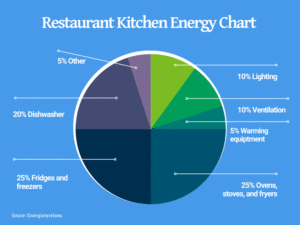
A restaurant is an unusually energy-hungry operation. The kitchen alone runs ovens, ranges, fryers, grills, extraction and refrigeration through every service, and much of it stays on all day. Walk-in fridges and freezers never switch off. Dishwashers and glass washers cycle constantly. Add heating, air conditioning and lighting to keep the dining room comfortable and welcoming from open to close, and the total load starts to look more like a small factory than a dining room.
This matters because high consumption magnifies every pricing decision. When you use a lot of energy, even a small difference in the unit rate translates into hundreds or thousands of pounds a year. A restaurant on a poor contract is not losing a little. It is losing a chunk of margin it can rarely spare.
Why Restaurants End Up Overpaying
Business energy works nothing like the household version. There is no price cap, contracts are fixed-term and generally cannot be exited early, and if one lapses the business is moved onto out-of-contract rates that rank among the most expensive available. Suppliers price renewals knowing most customers will not check, so the renewal quote that lands is rarely the best available. For a busy restaurateur with a hundred things to manage, accepting that renewal is the path of least resistance, and it almost always means overpaying.
Restaurants also have an unusual consumption pattern, with heavy, sustained demand across long trading hours, that generic quotes handle poorly. Getting the right deal means matching the contract to how a restaurant actually uses energy, rather than treating it like a nine-to-five office.
Getting the Costs Under Control
The most effective step is to compare the market with your restaurant’s specific usage in mind rather than accepting a renewal. Bringing restaurant energy costs down starts with seeing what the whole market would charge for a hospitality venue’s demand profile and matching the contract to it. Sector-aware procurement tends to beat a generic comparison here, because it accounts for the kitchen, the refrigeration and the long hours rather than treating the premises like any other.
Timing helps too. Energy prices track the wholesale market, and suppliers let you lock in a new contract months ahead, sometimes up to a year. Starting the process early, well before the current contract ends, gives the widest choice and the best chance of catching a favourable rate rather than being cornered into whatever is available at renewal. Marking the contract end date and reviewing the market ahead of it turns energy from an unpredictable cost into a planned decision.
Cutting the Usage Behind the Bill
A better rate pairs well with reducing consumption, and restaurants have plenty of room to do so without affecting the guest experience. Servicing refrigeration and extraction so they run efficiently makes a real difference, since they run constantly. Switching to LED lighting cuts both energy and the heat it adds in a hot kitchen. Maintaining heating and cooling, fixing door seals on fridges, and simple habits like not leaving equipment on overnight all add up across a year of daily service.
For a restaurant, where margins are tight and energy demand is high, getting both the rate and the usage right is not a nice-to-have. It is often the difference between a comfortable year and a stressful one.
Frequently Asked Questions
Why do restaurants pay so much for energy?
Because they are unusually energy-intensive, running kitchens, refrigeration, extraction, heating and lighting through long hours every day. That high consumption magnifies any poor pricing decision.
Is there a price cap protecting restaurants?
No. The cap applies only to household energy. Restaurants are fully exposed to the market, which makes comparing and timing a contract especially important.
Why does a restaurant need a sector-aware energy deal?
Because a restaurant’s demand profile, with heavy, sustained use across long trading hours, differs from a standard business. Matching the contract to that pattern produces a better result than a generic quote.
When should a restaurant review its energy contract?
Three to six months before it ends. Suppliers let you lock in a deal in advance, so starting early gives the most choice and better timing on wholesale prices.
What else can a restaurant do to cut energy costs?
Service refrigeration and extraction for efficiency, switch to LED lighting, maintain heating and cooling, check fridge door seals, and avoid leaving equipment running overnight. These reduce the usage behind the bill.