What Is SASE in Cybersecurity? Benefits, Components, and Use Cases
TL;DR
- SASE (Secure Access Service Edge) combines wide area networking and cloud-delivered security in one service.
- Core components include SD-WAN, secure web gateway, CASB, zero trust network access, and firewall as a service.
- Key benefits are consistent policy, simpler management, and secure access for remote and branch users.
- Common use cases are remote work, branch connectivity, cloud app control, and zero trust adoption.
Users, apps, and data no longer sit inside one office network. Traffic now flows from homes, branches, and mobile devices to cloud services. SASE is a model built for that reality.
What is SASE in cybersecurity?
SASE is an architecture that delivers networking and security together as a cloud-based service. It brings several separate tools under one policy and one point of control. The name is pronounced “sassy.”
To understand what Is SASE in cybersecurity, it helps to look at the problem it solves. Traditional designs sent remote traffic back to a data center for inspection. That path adds delay and strains the network as more work moves to the cloud.
SASE moves inspection and access control closer to the user. Security checks run at cloud edge locations instead of one central site. Users get a faster path, and the organization keeps consistent rules.
The model also fits zero trust thinking. NIST describes zero trust as a response to remote users, personal devices, and cloud assets outside an enterprise-owned network. SASE gives teams one way to enforce those access decisions across locations.
How does SASE work?
SASE places a set of networking and security functions in a cloud service. A user or device connects to the nearest edge location. The service checks identity, device status, and policy before it allows access.
Traffic is then inspected for threats and sent to its destination, whether that is a private app, a SaaS tool, or the open web. The same policy applies in every case. A branch office, a laptop at home, and a phone on mobile data all follow one rule set.
This design removes the need to stitch together point products at each site. Teams manage policy in one place and see activity across all connections.
What are the components of SASE?
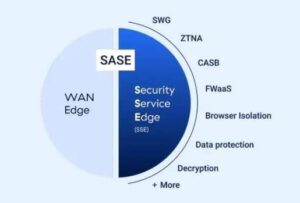
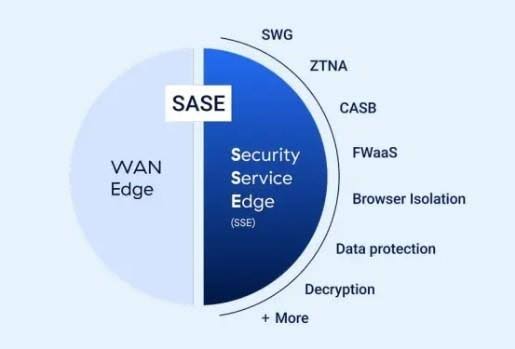
SASE combines one networking function with several cloud-delivered security functions. Each handles a different part of the access path.
SD-WAN
Software-defined WAN is the networking layer. It routes traffic across links such as broadband and mobile data based on app needs. It connects branches and sites without relying only on private circuits.
Secure web gateway
A secure web gateway filters internet traffic. It blocks malicious sites, enforces acceptable-use rules, and inspects downloads for malware. It protects users wherever they browse.
Cloud access security broker
A CASB sits between users and cloud apps. It shows which SaaS tools are in use, applies data rules, and flags risky activity. It helps control shadow IT.
Zero trust network access
ZTNA grants access to specific apps instead of the whole network. It checks user identity and device posture before each session. Access ends when the session does.
Firewall as a service
Firewall as a service delivers firewall controls from the cloud. It inspects traffic across sites and users with one rule set. Teams avoid managing a separate box at every location.
What are the benefits of SASE?
The main benefit is consistency. One policy covers every user, device, and location. Security no longer depends on whether traffic passes through a central office.
| Benefit | What it means in practice |
| Unified policy | Teams write access rules once and apply them everywhere |
| Less tool sprawl | Fewer separate products to buy, patch, and monitor |
| Better user experience | Traffic goes to nearby edge locations, not a distant data center |
| Stronger access control | Identity and device checks happen before each session |
| Easier scaling | New users and sites join through the service, not new hardware |
Simpler operations are a second gain. A single console gives administrators one view of activity across sites. That shortens investigations and reduces gaps between tools.
What are common SASE use cases?
SASE fits several everyday scenarios. Four of them drive most adoption.
Secure remote work
Remote staff connect to apps without sending traffic back to a data center. The service checks each user and device first. Work continues securely from any location.
Branch and site connectivity
Branches link to apps and to each other through SD-WAN. Security travels with the connection. Small offices get the same controls as headquarters.
Cloud and SaaS control
CASB and web filtering give visibility into cloud app use. Teams can set data rules and block risky services. This reduces unmanaged cloud exposure.
Zero trust adoption
SASE helps enforce zero trust access across many locations. NIST’s zero trust architecture guidance says access decisions should focus on protecting resources, not network location.
Who needs SASE?
IT leaders, network teams, and CISOs gain the most. Organizations with many branches, a hybrid workforce, or heavy cloud use see the clearest value. Smaller teams benefit from managing one service instead of several tools.
Industries with spread-out sites also fit well. Retail, manufacturing, healthcare, and finance all run distributed locations that need steady security. A shared policy keeps controls even across them.
What trends are shaping SASE?
Three trends stand out. First, SASE is tied closely to zero trust. NIST’s guide to building zero trust architectures lists SASE as one of the deployment approaches the general architecture supports.
Second, consolidation continues. Organizations want fewer vendors and one view of risk. SASE answers that need by bringing networking and security under one service.
Third, AI is entering the picture. Analytics can spot unusual user behavior across connections and recommend policy changes. Teams should treat these as aids and keep human review for access decisions.
Government models help set direction. CISA’s Zero Trust Maturity Model defines five pillars: identity, devices, networks, applications and workloads, and data. SASE can support several of them at once.
How can organizations start with SASE?
A phased approach works best. Few teams replace everything at once.
- Map users and apps. List who needs access to what, and from where.
- Start with one use case. Remote access or branch security gives a clear first win.
- Set identity-based policy. Define who can reach which apps under which conditions.
- Migrate in stages. Move sites and user groups in waves and measure results.
- Review regularly. Check logs and policies as the environment changes.
Organizations that follow these steps replace separate tools with one consistent access model. The goal is secure access that follows the user, wherever they are.
FAQs about SASE
Is SASE the same as SD-WAN?
No. SD-WAN connects networks and routes traffic. SASE adds cloud-delivered security on top, so it also controls how users access apps.
How is SASE different from SSE?
SSE covers the security services alone, such as web, cloud, and private app protection. SASE adds SD-WAN networking to that set.
Does SASE replace a VPN?
It can for many cases. ZTNA gives app-level access, which is narrower than the broad network access a traditional VPN provides.
Who introduced the term SASE?
Gartner introduced the term in 2019. It describes a model that merges WAN capabilities with cloud-delivered network security functions.
Is SASE only for large enterprises?
No. Smaller organizations also use it to cut tool sprawl. Cloud delivery reduces the hardware and upkeep that once limited adoption.