How to Compare Telegram Undress Bots Before Buying Credits
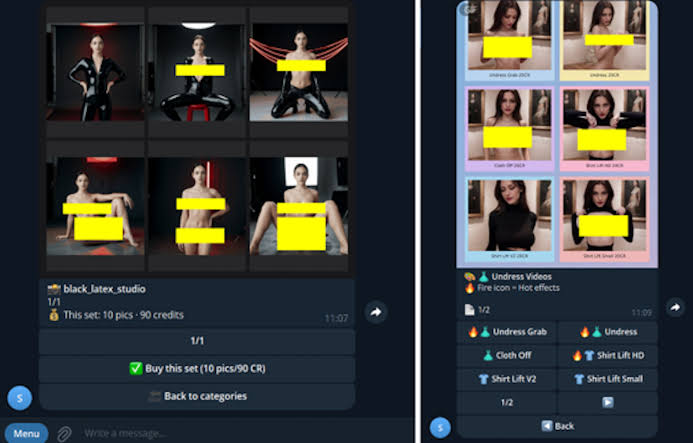
Telegram undress bots often look similar from the outside: upload an image, choose a mode, pay with Telegram Stars or another supported method, and wait for the result. In practice, the services can differ sharply in photo quality, video support, pricing, processing speed, and reliability.
Before buying a large credit package, it makes more sense to compare the modes you actually plan to use than to rely on a long feature list or a cheap-looking token bundle.
Start With Photo and Video Support
Not every undress bot handles the same type of generation equally well.
Some focus mainly on still images, while others also support video. Photo results can vary depending on the source image: full-body and partial-body photos, side angles, unusual poses, occlusions, low-resolution inputs, and complicated backgrounds may all produce very different results.
Video should be judged separately. Maintaining a consistent subject, pose, lighting, and background across multiple frames is harder than producing a single still image, so a bot that performs well with photos may still produce weak or unstable video.
If video is the main reason for choosing a service, test the video mode itself rather than assuming that strong photo results will carry over.
Do Not Compare Undress Bots by Mode Count Alone
A long menu does not necessarily mean better results.
Different modes may still produce very similar outputs if they rely on the same model or closely related settings. A service advertising dozens of presets can therefore be less useful than a smaller bot with a few modes that work consistently.
When comparing Telegram undress bots, more useful criteria include:
- photo and video consistency;
- processing time;
- cost per usable generation;
- free testing;
- payment methods;
- failed-generation handling;
- and whether the modes you actually want are available.
A shorter feature list can be the better option if those modes work reliably.
Calculate the Real Cost per Generation
Most Telegram undress bots sell credits, tokens, or another internal currency rather than charging a fixed cash price for every generation.
That makes package prices difficult to compare directly.
The useful figure is the cost of the specific generation you want. If a package costs $10 and the mode you use consumes enough credits for 20 attempts, the practical cost is about $0.50 per attempt. Another bot may sell a cheaper token bundle but charge far more credits for video or premium modes.
This matters especially when comparing photo and video. Video generations often consume more credits, and different video modes may have different prices.
Failed jobs should also be included in the calculation. A bot that looks cheap can become expensive if failed generations consume credits and users have to pay again for retries.
Check What the Free Trial Includes
A free trial is useful only when it tests something close to the feature you are considering paying for.
If free access is limited to a basic photo mode while the paid product is mainly interesting for video, the trial reveals little about the feature that matters.
Some bots offer one or two free attempts, while others restrict free credits to selected modes or require users to join a Telegram channel.
If there is no free testing, the smallest paid package is usually enough to check output quality, processing time, and real credit consumption before committing to a larger balance.
Compare Payment Methods and Plan Restrictions
Telegram Stars are common because they allow payment inside Telegram, but some undress bots also accept cryptocurrency, external cards, or several methods at once.
Services may sell token bundles, subscriptions, day passes, or plans marketed as unlimited.
The word “unlimited” should be checked carefully. A plan may still have daily limits, queues, lower priority, or restrictions on video and other expensive modes.
For occasional use, a small credit package may be enough. For frequent generation, a larger bundle or subscription only makes sense if the modes you actually use are included without restrictive limits.
Check Processing Time and Failed Generations
Generation speed can vary between bots and between individual modes.
A basic photo may finish quickly, while video can take much longer. Server load can also increase queue times, especially during busy periods.
Cheap pricing matters less if requests regularly fail or require repeated retries. A bot that charges slightly more per generation may still offer better value if successful jobs complete more consistently.
For video-heavy use, failure rate and queue time can matter almost as much as the nominal token price.
Look at Privacy Before Uploading Images
Uploading an image to a Telegram bot does not necessarily mean that the file stays inside Telegram.
The bot may forward the image to infrastructure controlled by the developer, a cloud provider, or another AI service. Users may have little visibility into where files are processed or how long they are retained.
Before uploading sensitive material, check whether the service explains how uploaded and generated files are handled, whether images are stored, and whether a privacy policy or support contact exists.
An anonymous bot with no website, policy, or contact information gives users very little information about what happens to uploaded files.
Images of other people should not be uploaded without their permission. AI-generated undress media can appear realistic even though it does not depict something that actually happened.
Final Thoughts
The best way to compare Telegram undress bots is to focus on the exact mode you plan to use.
Check the quality of that mode, calculate its real cost per successful generation, see how the bot handles failed jobs, and test it with a free attempt or small package before buying a large balance.
Mode counts and cheap token bundles matter much less if the actual generations are inconsistent, slow, or expensive to retry.