Why More SMEs Are Quietly Auditing Their Business Water Bills in 2026
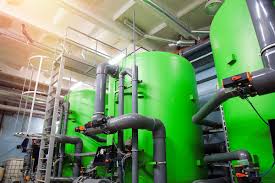
There is a slow-moving trend in UK small business operations that doesn’t get much attention but is genuinely changing how the operating cost side of small companies is run. SMEs have started auditing their utility bills routinely, instead of treating them as fixed costs that arrive every quarter and just have to be paid.
Energy got there first. Most SMEs now run an annual energy procurement exercise. Some run it more often than that. Water has been the laggard. The non-domestic water market in England and Scotland was deregulated in 2017, but adoption of competitive procurement has been slower than the energy market saw because the absolute numbers are smaller and the visibility is worse.
In 2026 that is shifting noticeably. Several factors have stacked up at once.
The wholesale water charges are rising faster than the headline inflation rate. The five-year regulatory price settlement that came into effect in April 2025 increased wholesale charges across most regional water companies, and the increases have started showing up clearly in commercial water bills. SMEs noticing 6 to 11 percent year-on-year increases on water are more motivated to do something about it than SMEs whose bills were stable.
The retailer panel has matured. When the market opened in 2017 there were a small number of credible commercial water retailers and the price spread was narrow. Eight years in, the panel is larger, the pricing is more competitive, and the gap between the highest and lowest priced offers is wide enough that switching produces meaningful savings.
Brokerage and procurement services have caught up. The kind of utility brokerage businesses that have existed in the business energy market for two decades now operate in business water with the same model. Specialists like Utility Bidder handle the comparison, the contract negotiation, the switching paperwork, and the ongoing renewal management on behalf of SME customers. The exercise of switching that used to require a finance director spending two weeks on the phone is now a single conversation with a broker.
The auditing element is the newer development. Switching the retailer is one part of the savings opportunity. The other part is the audit of the underlying water consumption, which often surfaces opportunities that switching alone doesn’t address. Leaks. Inaccurate meter readings. Billing errors. Wrong meter classifications. Incorrect surface water drainage charges. The audit side can sometimes recover historic overcharges, which is found money that a pure retailer switch doesn’t access.
What a basic SME water audit actually involves:
Meter reading verification. Comparing the meter reading on the bill to a manual read of the meter on the wall. Discrepancies happen more often than people expect, particularly on estimated bills.
Meter sizing check. Some sites have meters sized larger than their actual consumption justifies, which results in standing charges higher than they need to be. A meter downgrade, where appropriate, reduces the standing charge.
Surface water drainage assessment. Most commercial sites pay surface water drainage charges based on their site area. Sites where rainwater doesn’t actually drain to the sewer system (because of soakaways, ponds, or other on-site management) are often eligible for rebates of these charges. The process is paperwork-heavy but the rebates are substantial.
Leak detection. Continuous low-level water flow on a meter, particularly overnight when the business is closed, indicates leaks somewhere on the site’s water network. Identifying and repairing these is usually quick and produces immediate ongoing savings.
Trade effluent review. Businesses that discharge water with specific contamination profiles (food processing, certain manufacturing) pay trade effluent charges. These charges are based on assumed contamination levels that may not match actual current operations.
Tariff classification. Some businesses end up on the wrong tariff class for their actual usage pattern. The wrong classification often costs more than the correct one.
The combined effect of switching plus auditing can produce savings significantly larger than either exercise produces alone. A retailer switch typically delivers 5 to 12 percent on the retail charge portion of the bill. An audit can identify another 8 to 25 percent of recoverable historic and ongoing spend, depending on what the audit surfaces. For an SME spending £8,000 to £15,000 per year on water across a few sites, the combined recovery is often £1,200 to £3,500 in the first year, plus an ongoing run-rate reduction.
The reason this is a 2026 story rather than a 2017 story is that the brokerage market for SME water has reached the point where the friction of the exercise has dropped below the savings it produces. In 2017, switching water retailer required real effort from the business. In 2026, it requires a single email and a couple of signed contracts. The friction has dropped. The savings have risen. The maths are now clearly worth doing.
A few practical pointers for an SME thinking about its water bills:
Pull the last twelve months of water bills before doing anything else. The pattern in the data is usually the first place the savings opportunity becomes visible.
Read the actual meter. Not the estimated number on the bill. The actual current reading. Comparing the two often reveals discrepancies that are worth a conversation with the current supplier before anything else.
Map the renewal dates. Multi-site businesses sometimes have multiple supply contracts ending on different dates. Aligning them under a single renewal cycle simplifies management and often unlocks better consolidated pricing.
Ask about historic recovery. Some brokers and auditing services include historic overcharge recovery as part of their initial review. Where there are surface water drainage rebates available or billing errors to recover, this can produce substantial one-off savings on top of the ongoing run-rate reductions.
Water bills are the operating cost category most likely to have unrealised savings sitting inside them in 2026. The reason is mostly that nobody bothered to look. The SMEs that look in 2026 will find the savings. The SMEs that don’t will be paying retail margins and historic billing errors quietly into the next renewal cycle.