How to Keep Everyday Finance Decisions Separate From High-Risk Speculation
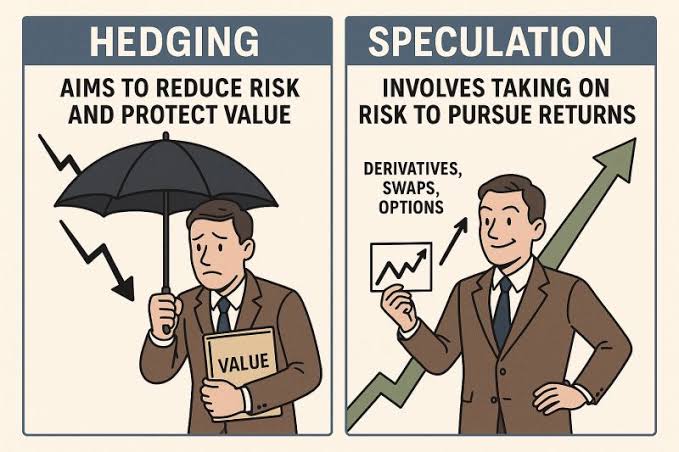
There is a world of difference between managing your everyday finances and taking a punt on something speculative, yet the two have a habit of bleeding into one another, often without anyone quite deciding to let them. The rise of slick trading apps, cryptocurrencies, and the general blurring of investing, gambling and entertainment has made it easier than ever to move money from the serious business of paying your bills into the very different business of hoping something goes up. Keeping these two parts of your financial life properly separate is one of the more important boundaries you can draw, and unfortunately one of the easiest to let quietly slip.
Why mixing the two is so risky
The fundamental problem with mixing everyday money and speculative money is that they have completely different jobs and completely different risk profiles. The money that pays your rent, your bills and your food has to be there, reliably, when it is needed, which means it cannot be exposed to the possibility of disappearing. Speculative money, by definition, is money you might lose entirely, because that is the very nature of a high-risk bet. When the two pots merge, the safe money inherits the risk of the risky money, and a bad week in something speculative can suddenly mean a missed bill or an empty fridge. This is how people get into real trouble, not usually through a single dramatic loss but through the slow erosion of the boundary, a little of this month’s rent put into something that surely cannot fail, a credit card used to chase a position, the housekeeping quietly funding the punts. The danger is not speculation itself, which can be a perfectly legitimate pursuit with money you can afford to lose, it is speculation funded by money you cannot.
Drawing a clear line
The cleanest protection is a physical separation of the two, kept boringly simple. Your everyday finances, the income that covers your essentials, your bills and your emergency savings, should live in their own accounts and never be touched for anything speculative. Anything you choose to put at risk should come only from genuinely surplus money, what is left after the essentials are covered and a sensible buffer is in place, held separately and treated in your own mind as money that has already left your life. If losing it entirely would change how you live or what you can pay, it is not surplus, and it has no business being anywhere near a high-risk bet. Setting a firm figure in advance for how much, if anything, you are prepared to expose to speculation, and refusing to top it up once it is gone, keeps the activity in its proper place as a small and contained part of your finances rather than a creeping threat to the rest of them.
Borrowing is where this boundary matters most of all, because borrowing to speculate combines two risks into one and can turn a manageable loss into a lasting debt. Taking on credit to fund a bet of any kind means you are obliged to repay it regardless of how the bet turns out, so a loss leaves you worse off than if you had never started, still owing the money with nothing at all to show for it. This is quite different from using credit sensibly to manage the necessary parts of your everyday finances. Someone whose essential finances have become tangled, with several debts pulling in different directions, might quite reasonably consider a loan for debt consolidation to bring order to the predictable, unavoidable side of their financial life. That is borrowing in the service of stability. Borrowing to chase a speculative gain is the opposite of that, and keeping the distinction clear in your own head is part of keeping the boundary intact.
Keeping the line in place when temptation strikes
Drawing the line is easier than holding it, because the whole design of modern speculative products works quietly against you. Apps are built to feel like games, with bright colours, instant notifications and the same little rewards that make any habit hard to break, and they deliberately blur the line between informed investing and impulsive betting. The sense of a sure thing, fuelled by stories of the people who got rich and a careful silence about the many who did not, is precisely what tempts people to reach past their surplus and into money that should be untouchable. The defence against this is mostly structural rather than a matter of willpower. If the speculative money lives somewhere separate and slightly inconvenient to top up, and the everyday money is not linked to the app at all, the friction itself protects you in the moments when your judgement is at its weakest.
It also helps to be honest with yourself about what you are actually doing and why. There is nothing wrong with enjoying a small, contained amount of risk-taking as a hobby, provided it is genuinely money you can afford to lose and it is not quietly pretending to be a financial strategy. The trouble starts when speculation begins dressing itself up as a plan for your future, or when the excitement of it starts reaching for money that belongs to your present. Keep the everyday and the speculative in separate boxes, fund the second only from what you can truly spare, never borrow to feed it, and you can let the riskier part of your financial life be exactly what it should be, a small and clearly bounded thing, while the part that actually keeps your life running stays as steady and reliable as it needs to be. That separation will not make you rich, but it will make sure that the worst day in your speculative life never becomes the worst day in your real one.