Electrical System Design Considerations for Large Warehouse Construction Projects
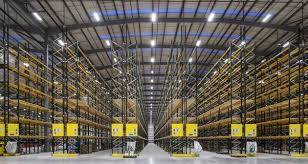
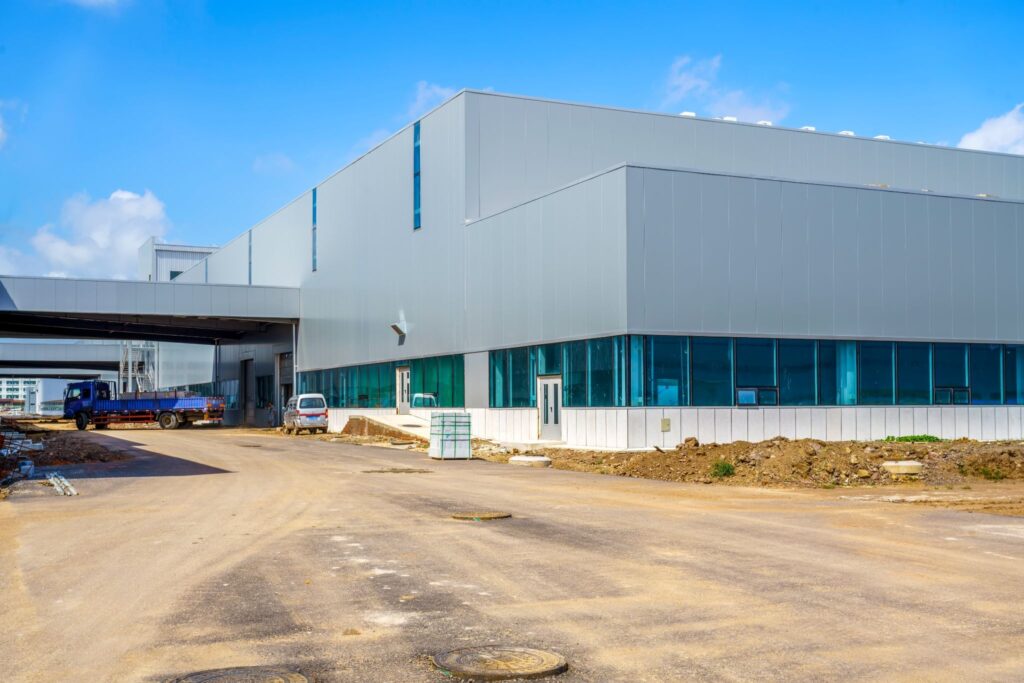
Image by 2045 on Freepik
Every large warehouse project forces you to design an electrical system for a building that doesn’t fully exist yet, serving operations that will almost certainly change within a few years.
The decisions you make during this window lock in your safety profile, energy costs, and ability to absorb growth for decades.
Get them right and the system disappears into the background. Get them wrong and you’re staring at six-figure retrofits, operational downtime, or the kind of electrical failure that injures people and burns buildings down.
Key Takeaways
- Electrical distribution and lighting equipment are the leading cause of warehouse fires, responsible for 18% of incidents and 31% of direct property damage according to NFPA data
- Undersized service is the most expensive early mistake, often forcing costly upgrades within three to five years as operations outgrow the original design
- Lighting controls, submetering, and demand management can cut energy costs by 15 to 50% beyond efficient fixtures alone, with utility incentives covering 10 to 20% of electrical equipment costs on qualifying projects
- Early coordination between electrical, structural, mechanical, and fire protection trades catches conflicts on paper that cost five to ten times more to fix in the field
Before You Talk Voltage, Talk Operations
The electrical design conversation starts with a question most people skip: what is this building actually going to do? A single-shift pallet storage facility with minimal lighting and basic HVAC has an entirely different power profile than a three-shift e-commerce fulfillment center running conveyors, automated sortation, and dense picking zones around the clock.
Get specific early. Map out your shift schedules, peak overlap periods, equipment lists, and charging demands.
Build a preliminary load schedule that includes lighting, HVAC, machinery, forklift charging, office areas, and IT infrastructure, then apply diversity and growth factors so the system you design today can absorb the automation, additional shifts, or new machinery you’ll likely add within five years.
The cost of getting this wrong is real. An undersized service entrance that needs upgrading three years after opening can easily run six figures, between new switchgear, transformer upgrades, utility coordination, and the operational downtime during the work. A slightly larger initial service costs a fraction of that.
Codes, Safety, and the Consequences of Cutting Corners
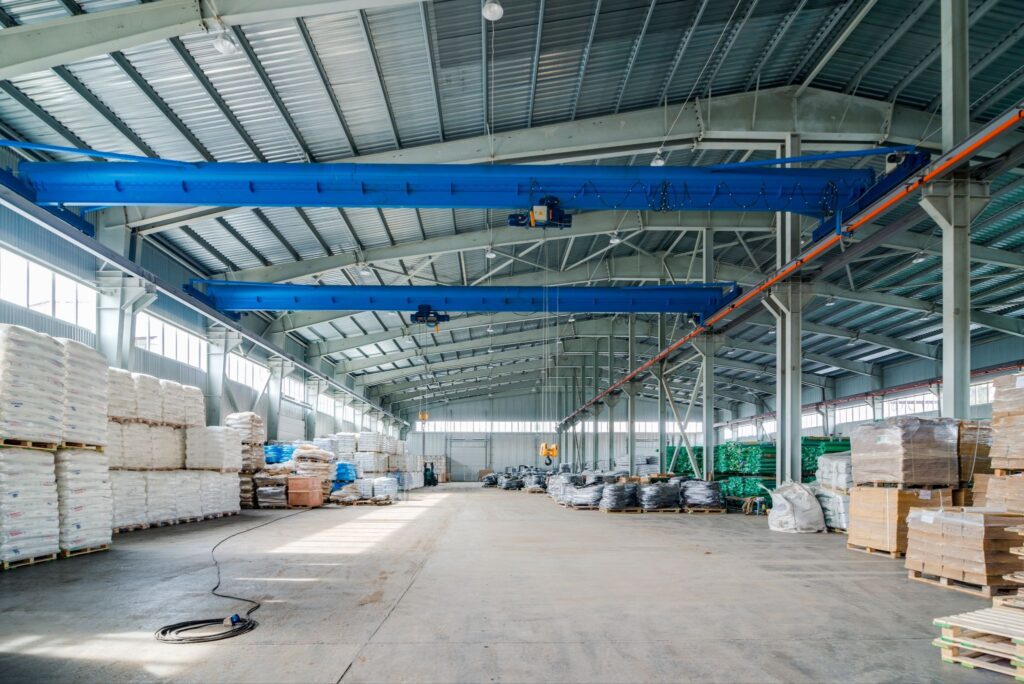
Image by nikitabuida on Freepik
Electrical codes aren’t paperwork. They’re the minimum threshold that keeps people alive. For warehouse projects, the National Electrical Code (NEC/NFPA 70) forms the foundation, with local amendments, fire codes, and occupancy-specific requirements layered on top.
Inspectors in different jurisdictions focus on different things, which is why working with electricians who know your local code landscape makes a measurable difference in permitting speed and first-pass inspection rates.
The stakes are not abstract. Electrical fires account for roughly 22% of all workplace fires in the United States, and an estimated 5 to 10 arc flash incidents occur daily across American workplaces.
According to OSHA-referenced NFPA 70E data, 56% of electrical injuries in recent years were caused by direct exposure to electricity through shock, electrocution, arc flash, or arc blast.
In large warehouse environments where high-voltage distribution, forklift charging, and dense mechanical systems converge, the margin for error is thin.
Common violations that keep showing up
NFPA and OSHA inspections consistently flag blocked panel clearances, missing emergency lighting, incorrect circuiting of life safety loads, and improper overcurrent protection.
Grounding and bonding shortcuts are another persistent problem that may not surface for years, right up until a minor fault cascades into an arc flash event that shuts down operations and sends someone to the hospital.
A pre-application meeting with your local authority having jurisdiction can surface these issues early, especially on projects involving fire pumps, high-rack storage, or hazardous materials.
Power Distribution Across a Big Floorplate
Large warehouses stretch your distribution system in ways that smaller commercial buildings don’t.
You’re dealing with long feeder runs, scattered loads, and distant corners of the building that all need reliable power without excessive voltage drop.
Most large warehouses operate on a 480/277V system to efficiently power HVAC equipment and high-bay lighting, with step-down transformers providing 208/120V for office spaces, workstations, and small equipment loads.
The key is placing your main switchgear where it’s accessible for maintenance but protected from forklift traffic, water intrusion, and physical damage, then distributing transformers and panels in logical zones so you’re not running excessive conduit across the entire building.
Lighting: The Part Everyone Notices
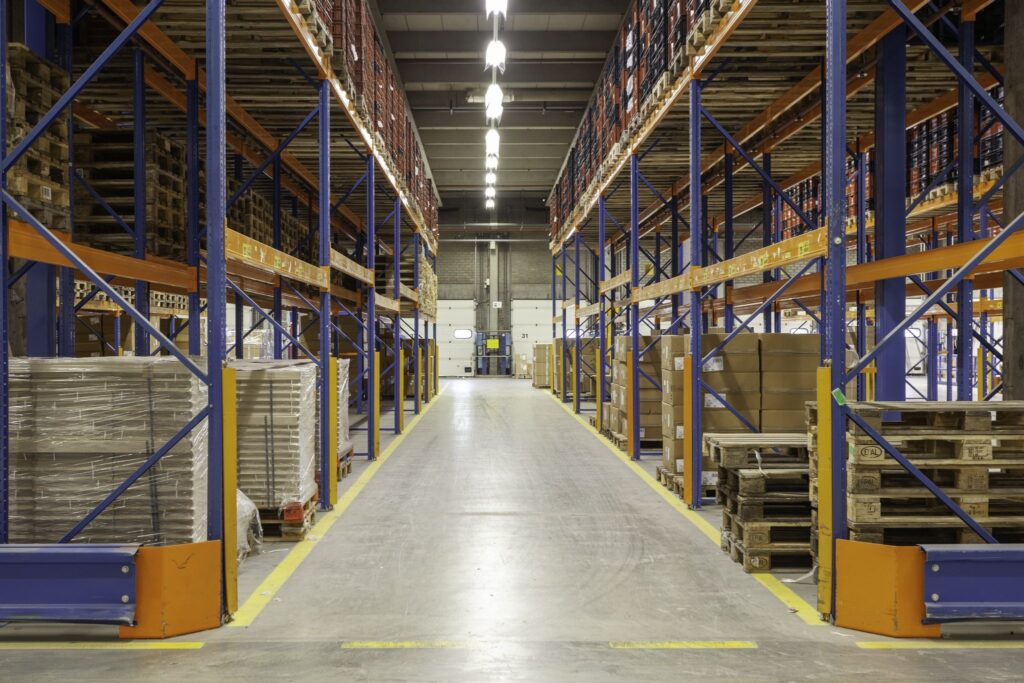
Image by wirestock on Freepik
Lighting is where your electrical design choices become visible to every person who walks into the building, and it’s one of the largest energy consumers in a warehouse.
According to industry data, lighting can account for 30 to 40% of a warehouse’s total electrical consumption, which makes it both the biggest efficiency opportunity and the easiest place to waste money if the design is wrong.
LED high-bay fixtures have become the standard for good reason. The U.S. Department of Energy estimates that LED technology can reduce warehouse lighting energy consumption by 50 to 70% compared to legacy metal halide or high-pressure sodium systems, while delivering better color rendering, instant-on capability, and lifespans of 50,000+ hours that dramatically reduce maintenance at heights of 30 feet or more.
Payback periods for LED warehouse retrofits typically land between two and four years, and often under one year when utility rebates are factored in.
Not every zone needs the same light
The Illuminating Engineering Society (IES) publishes recommended foot-candle levels for different warehouse applications, and getting these right is the difference between a facility that works and one that generates complaints, errors, and safety incidents.
Recommended Foot-Candle Levels by Warehouse Zone
| Warehouse Zone | Foot-Candles | Design Notes |
| General Storage | 10 – 30 fc | Even coverage to reduce shadows between racks |
| Racked Aisles | 20 – 40 fc | Vertical illumination critical for reading shelf labels |
| Shipping / Receiving Docks | 30 – 50 fc | Supplement with dock-door lighting for trailer interiors |
| Picking / Packing Stations | 30 – 75 fc | High-activity zones; add task lighting at workstations |
| Inspection / Quality Control | 75 – 100 fc | High CRI (80+) and focused, low-glare fixtures |
| Warehouse Offices | 30 – 50 fc | Soft, uniform lighting; 4000 – 5000K color temperature |
Source: IES RP-7, OSHA workplace lighting guidelines
Controls are where the savings compound
Occupancy sensors in low-traffic aisles, daylight harvesting near dock doors and skylights, and shift-based scheduling can reduce lighting energy by an additional 30 to 50% beyond the LED conversion itself.
On a system that already represents 30 to 40% of your total electrical consumption, that kind of reduction shows up clearly on your operating budget.
Material Handling, Automation, and Charging Loads
In a modern distribution center, your material handling equipment can easily become your single largest electrical load.
Conveyors, sortation systems, and robotics all run on the same power backbone, and they all need dedicated circuits, clean power, and enough spare panel capacity to handle the motor or sensor your operations team will inevitably want to add six months after opening.
Forklift and equipment charging
Battery charging rooms require proper ventilation, clearances, and organized wiring, but the bigger issue is demand management.
When an entire fleet plugs in at shift change, your demand peaks spike and your utility bill follows.
Staggered charging schedules or smart chargers that manage load profiles can flatten those peaks and save meaningful money over time.
Dock areas and future-proofing
Loading docks need leveler receptacles, heated shelter circuits, and in many cases provisions for future EV truck charging.
This zone also ties into exterior lighting and security systems. If you skip these provisions during construction, you’ll end up with improvised solutions and code violations that compound over time.
Coordinating Electrical with HVAC and Mechanical
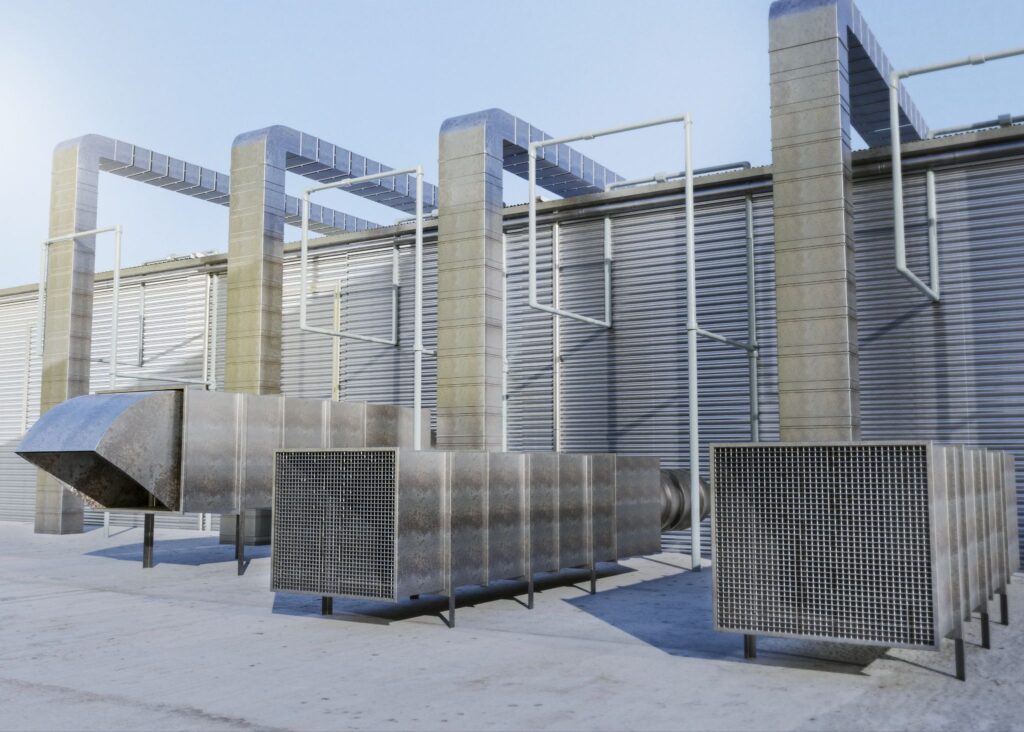
Image by Freepik
In certain climates, HVAC and ventilation can dominate your electrical load. Rooftop units, make-up air handlers, exhaust fans, and destratification fans all require properly sized feeders, motor starters, and often variable frequency drives (VFDs).
Getting this right means coordinating mechanical and electrical drawings early, because the worst version of this story is a rooftop unit landing exactly where the structural team placed a brace frame, leaving the electrical feeders with nowhere to go.
A building management system (BMS) ties these systems together, handling scheduling, temperature control, and in some cases lighting zones.
Early coordination between your electrical design team and controls contractor prevents duplicate sensors, tangled wiring, and the kind of integration headaches that show up during commissioning when they’re most expensive to fix.
The trend data from the BMS also becomes your best tool for identifying energy waste and adjusting setpoints after the building is operational.
Fire Protection, Emergency Power, and Life Safety
Fire protection and electrical design are deeply intertwined in warehouse construction. Fire pumps need dedicated, reliable feeders and in some cases backup power.
Sprinkler systems, smoke detection, and fire alarm panels all require stable circuits and clear wiring pathways that won’t be compromised by future equipment installations or racking changes.
Emergency vs. standby power
These two categories serve different purposes, carry different code requirements, and drive different infrastructure decisions. Understanding the distinction early prevents both overspending and dangerous gaps in coverage.
| Emergency Power | Optional Standby Power | |
| What it covers | Egress lighting, fire alarms, certain mechanical systems required by code | IT rooms, cold storage, critical conveyors, and other systems you choose to protect |
| Code requirement | Mandatory per NEC and local fire codes | Owner’s decision based on operational risk |
| Transfer time | 10 seconds max (NEC Article 700) | Typically 60 seconds or manual |
| Drives sizing for | Generator capacity, fuel type, automatic transfer switches | Separate or combined ATS, UPS systems, fuel runtime |
| Testing/maintenance | Required by code on a set schedule | Based on manufacturer specs and internal policy |
| Failure consequence | Life safety risk, code violations, liability | Operational downtime, product loss, revenue impact |
Energy Efficiency and Utility Incentives
Energy efficiency in warehouse design isn’t a sustainability talking point; it shows up directly on your P&L.
Energy codes already push you toward tighter lighting power density and better controls, but the real savings come from going beyond code minimums with LED lighting, VFDs on fans and pumps, right-sized HVAC systems, and smart metering that gives you visibility into where power is actually being consumed.
Submetering by tenant, department, or process lets facility managers spot waste and adjust in real time.
Some operations teams have restructured shift patterns after seeing their demand spike data for the first time, turning a utility bill problem into an operational scheduling fix that cost nothing to implement.
Coordinating Electrical with Racking, Layout, and Operations
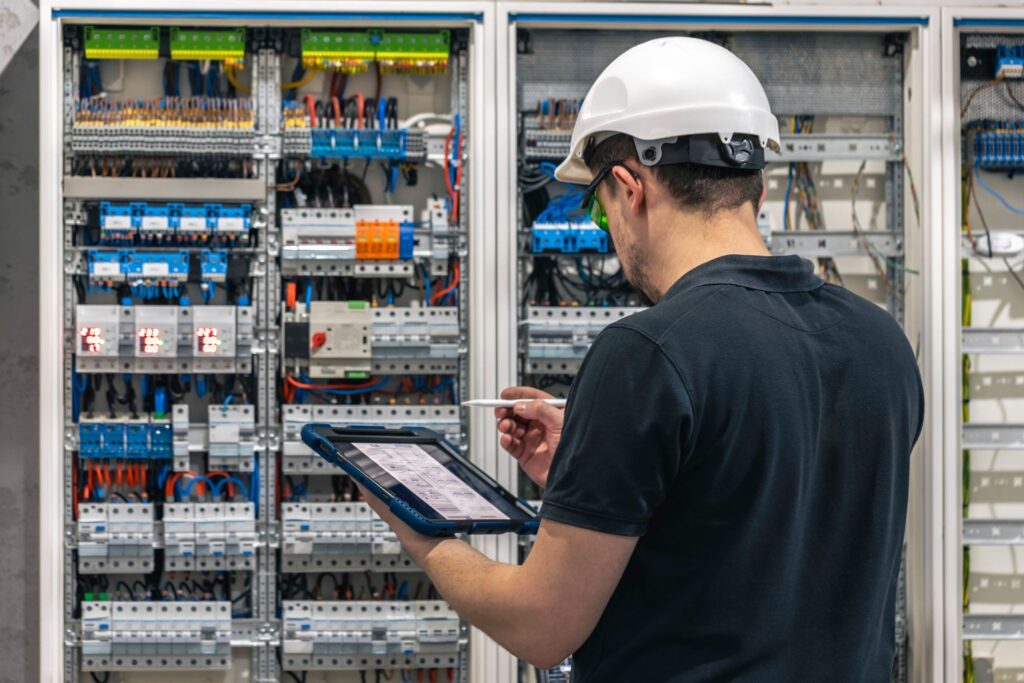
Image by pvproductions on Freepik
Electrical design can’t happen in isolation from the rest of the building. Your racking layout, aisle widths, and clear heights directly influence lighting placement, wiring routes, and equipment locations.
If the electrical rough-in is done before the racking plan is finalized, you’ll end up moving dozens of fixtures and receptacles after the fact, and every one of those changes becomes a change order.
Plan receptacles and power drops where people actually work: packing stations, inspection tables, label printers, and scanner charging areas.
Underestimating plug load at these locations leads to daisy-chained power strips across walkways, creating trip hazards and code violations that accumulate quietly until an inspection or an incident surfaces them. A few extra circuits during construction cost almost nothing compared to the workarounds that follow.
Keep electrical equipment away from forklift traffic zones and out of hose-down spray paths, and provide adequate working clearance around switchgear, transformers, and panels so technicians can service equipment safely without shutting down half the building.
Digital Infrastructure and Low-Voltage Systems
Modern warehouses depend heavily on low-voltage systems, and those systems need as much planning as the power distribution.
Wi-Fi access points, barcode scanners, WMS servers, and security cameras all require quality power, dedicated circuits, and clean cable pathways.
Plan your MDF and IDF rooms early with sufficient cooling, grounding, and circuit capacity, and make sure cable tray routes don’t conflict with sprinkler mains or conveyor systems.
Security and access control need dedicated circuits and secured routing, and it’s worth overbuilding capacity here because cameras at docks, gates, and interior aisles tend to get added after the initial build.
For warehouses handling flammable materials or special processes, hazardous area classifications will influence wiring methods, fixture ratings, and equipment selection, so bring your process engineers and electrical team together during early design to avoid permit-stage surprises.
The Most Expensive Mistakes (And How to Avoid Them)
Certain errors show up repeatedly on large warehouse projects, and they’re almost always cheaper to prevent during design than to fix after construction:
- Undersizing for future loads: Owners build for today’s operations then add automation or new machinery within a few years and hit capacity limits. Sizing your initial service with a 20 to 30% growth margin costs a fraction of what a retrofit demands.
- Late-stage trade conflicts: Conduit routes that clash with sprinkler mains, ductwork blocking panel access, or conveyors installed over junction boxes. Regular coordination reviews during design catch these on paper before they harden into change orders.
- Neglecting work areas: Packing stations with dim lighting and insufficient outlets slow productivity and create the kind of improvised wiring that safety teams flag.
- Skipping the pre-application meeting: A single meeting with your local authority having jurisdiction can surface permit requirements and inspector priorities that would otherwise emerge as redesign requests months later.
Working with Local Electrical Contractors Who Know Warehouses
Local expertise matters more than people assume. Denver commercial electricians, or experienced commercial electricians in whatever market you’re building in, bring knowledge of local code amendments, inspector expectations, utility interconnection processes, and incentive programs that out-of-area contractors simply don’t have.
Utility rebates on lighting, controls, and high-efficiency equipment can offset 10 to 20% of your electrical equipment costs on warehouse projects, and a local team that knows the programs can help you structure applications early enough to capture every available dollar.
The best outcomes happen when the electrical contractor joins preconstruction meetings early enough to influence conduit routing, panel placement, and equipment positioning.
Field-informed input at the design stage saves money by simplifying installation and reducing conflicts that would otherwise surface during construction.
On design-build projects especially, that collaboration can shave meaningful time and cost off the electrical scope.
Quality installation, testing, and commissioning close the loop. Before you take occupancy, make sure you have clean as-built drawings, labeled panel schedules, and basic training for your operations team.
When the person on the night shift knows which breaker feeds which zone, the difference between a five-minute reset and a two-hour scramble disappears.
A Practical Design Sequence to Keep Things on Track
- During planning: define your operational profile and growth expectations, build a preliminary load schedule covering all major systems, and engage your utility early on service options, capacity, and available incentive programs.
- During design: confirm service size and voltage, lay out switchgear, transformers, and panels with accessibility in mind, coordinate lighting with the racking plan, and lock in life safety, fire protection, and backup power requirements before drawings go to permit.
- During construction: walk the site regularly with drawings in hand to catch conflicts before they harden into change orders, confirm clearances and labeling as rough-in progresses, and test lighting levels, controls, and critical circuits before racking and equipment block access.
- At turnover: collect as-built drawings, panel schedules, and equipment certifications, then train your operations team on breaker locations, meter reading, and who to call when something goes wrong.
Conclusion
No one thinks about a warehouse electrical system when it’s working well, and that’s exactly the point. The best version of this infrastructure is the one your operations team never has to worry about because someone made the right calls before the concrete was poured.