Can Red Light Therapy Tighten Loose Neck Skin? What to Expect
Introduction
Loose neck skin is one of the most visible and frustrating signs of aging. It tends to appear earlier than many people expect, is difficult to treat, and is resistant to most surface-level skincare. The question of whether red light therapy can actually tighten neck skin is therefore a significant one, and the answer is more nuanced than a simple yes or no.
Why the Neck Is Difficult to Treat
The neck presents a unique set of challenges. It has fewer sebaceous glands than the face, making it more prone to dryness and faster moisture loss. It is in constant motion, nodding, turning, flexing, which means it experiences more mechanical stress than most other skin areas. It also receives cumulative sun exposure, often without the SPF protection applied to the face. These factors combine to make the neck one of the areas that ages most noticeably and most quickly.
The Role of Collagen in Neck Laxity
Skin tightness is fundamentally about collagen density and the integrity of the dermal matrix. As collagen production declines with age, and is accelerated by UV exposure, the structural support of the skin weakens. The skin becomes thinner, less elastic, and less able to resist gravity. To address laxity, any treatment must either slow collagen loss, stimulate new collagen production, or both.
How Red Light Therapy Addresses Neck Laxity
Red light therapy works by stimulating fibroblasts, the cells responsible for collagen synthesis, using specific wavelengths of light (typically 630–850 nm). When these wavelengths reach the dermal tissue, they trigger a cellular response that upregulates collagen and elastin production. Over time, this can improve the structural density of the skin and contribute to a firmer appearance.
Applying neck and chest red light therapy consistently can address the specific challenges of the neck by stimulating collagen from below the surface, rather than relying on topical ingredients that may not penetrate deeply enough.
What the Research Says
Clinical studies on red light therapy consistently show improvements in skin elasticity and collagen density with regular use. Peer-reviewed research published through the National Institutes of Health has documented measurable changes in skin firmness with photobiomodulation treatment over 8–12 week periods.
These studies are often conducted on facial skin, but the mechanism is the same in neck tissue. The key variables are treatment duration (number of weeks of consistent use), frequency (sessions per week), and device quality.
Realistic Expectations
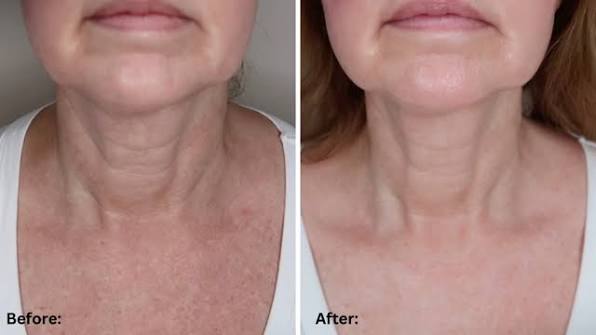
Red light therapy can meaningfully improve skin firmness and quality, but it is not a surgical intervention. For mild to moderate neck laxity, consistent use over 8–12 weeks should produce visible improvement in texture, tone, and some degree of tightening. For significant structural laxity, particularly post-weight-loss skin or more advanced aging, it works best as part of a broader regimen and may not produce the dramatic results achievable through in-office procedures.
Building an Effective Neck Treatment Protocol
- Start with 4–5 sessions per week
- Apply on clean skin, or immediately before light-compatible serums
- Extend treatment from the jawline to the collarbone
- Combine with daily SPF application and quality moisturization
- Take progress photos monthly, changes are cumulative and subtle
Conclusion
Red light therapy represents one of the more evidence-backed at-home options for addressing neck laxity. It is not a quick fix, but it works with the skin’s own biology to produce gradual, real improvement in texture, firmness, and tone. With consistent use and realistic expectations, it is a worthwhile addition to any neck-focused skincare routine.