Why Industrial Drying Is the Bottleneck Most Manufacturers Aren’t Measuring
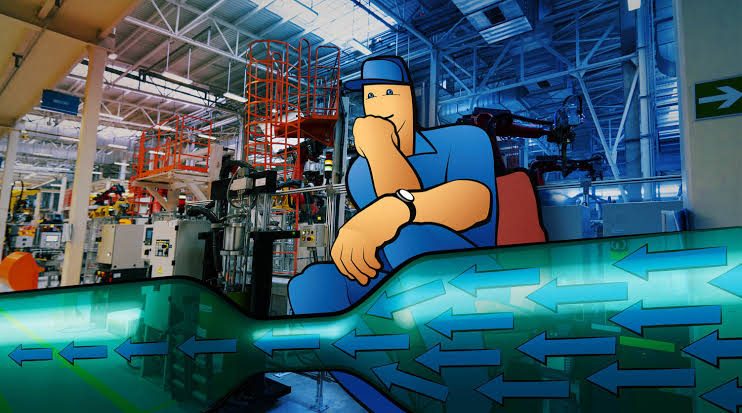
In manufacturing, the processes that get the most engineering attention are usually the ones making noise – press cycles, weld stations, CNC operations. The drying stage rarely makes the shortlist for optimization reviews. It sits at the end of a wash or rinse cycle, it runs continuously, and it mostly gets ignored until something goes wrong.
That’s a problem, because for a significant number of production lines across metal finishing, food and beverage, automotive, and packaging, drying is quietly setting the ceiling on throughput.
The Hidden Constraint
When a conveyor line runs product through a wash stage, the drying system downstream has to keep pace. If it can’t, the options are limited: slow the line, add drying length, or accept wet product at the next stage. None of those options are free. Slowing the line directly cuts output. Adding drying length means capital expenditure and floor space. Accepting wet product creates quality defects, rust, adhesion failures, or contamination depending on the application.
What makes this particularly frustrating for process engineers is that drying underperformance is often invisible in standard OEE tracking. The line is running. Parts are moving. The drying stage appears to be functioning. The actual cost shows up later, in rejects, in coating adhesion failures, in rust claims, or in the quiet acceptance that the line just “can’t run faster than X.”
Where Compressed Air Falls Short
The majority of industrial blow-off and drying applications still rely on compressed air as the primary force. Compressed air is familiar, it’s already infrastructure in most plants, and it works well enough for many point-of-use applications. For continuous drying across a conveyor line, however, it carries some significant limitations.
The core issue is pressure drop over distance. A compressed air nozzle operating at 80 PSI loses the vast majority of its effective impact pressure within six inches of the nozzle tip. Maintaining adequate drying force across a wide product requires either high nozzle density, very close proximity to the product, or both. The horsepower demand adds up fast. One documented steel strip drying application required 468 horsepower across three compressed air chevron headers just to dry a 72-inch wide product line adequately. Even at that level of energy input, the system was vulnerable to pressure drops that led to rust on finished coils.
Beyond the energy cost, compressed air systems for continuous drying require ongoing maintenance: compressor servicing, pressure regulation, leak management, and filter maintenance all add to the total cost of ownership in ways that don’t always appear in the original equipment budget.
What Engineered Air Systems Do Differently
The shift happening across precision manufacturing is toward low-pressure, high-velocity air knife systems – centrifugal blower-powered systems that generate large volumes of precisely directed air rather than high-pressure point-source blasts. The performance difference comes down to how force is delivered at the product surface.
A well-configured air knife system operating at 1 to 4 PSI can deliver exit velocities exceeding 30,000 feet per minute across the full width of a product, maintaining consistent drying force without the pressure drop limitations of compressed air nozzles. The physics favor coverage and consistency over raw pressure – which is exactly what continuous conveyor drying requires.
The energy comparison is substantial. The same steel strip application mentioned earlier was projected to reduce total line horsepower by 336 HP after switching to a blower-based nozzle manifold system, representing over $130,000 in annual energy savings on a single line. The centrifugal blower systems powering these air knife setups also run at significantly lower noise levels and require less ongoing maintenance than compressor-based infrastructure.
Making the Case Internally
For process engineers who have identified drying as a constraint, the challenge is often making the case for capital investment when the line is technically running. The argument that resonates with operations leadership is usually framed around line speed potential rather than energy savings alone.
If a drying upgrade allows the line to run 15 to 20 percent faster without quality issues, the throughput gain can be calculated against current capacity utilization and priced accordingly. Energy savings become a secondary benefit that strengthens the ROI case rather than carrying it alone.
The facilities that have moved in this direction consistently report that the combination of throughput gain, energy reduction, and quality improvement makes the payback period shorter than the initial capital estimate suggested.
For engineers who have been accepting a throughput ceiling as a fixed constraint, it may be worth asking whether the drying stage is actually the variable.