Why Online Privacy Is Becoming a Global Issue in the Digital Age
Online privacy is no longer confined to local concerns. For individuals and businesses in the United States, data often traverses international borders. This shift links internet privacy within the U.S. to global rules and risks.
Today, the term “privacy” encompasses more than just names and emails. It includes location history, browsing habits, device IDs, biometric data, and behavioral profiles. Much of this data collection occurs in the background, making digital surveillance often invisible until it impacts our lives.
The risks are escalating as more everyday activities move online. Tasks like payments, messaging, health portal access, and work apps generate new data points. For journalists, travelers, and remote workers, a single insecure network can reveal more than intended.
A VPN is a practical tool for enhancing online privacy. It helps conceal what others can see on the network, especially in public places. While it won’t eliminate all risks, it adds a crucial layer of protection where many breaches occur.
This article delves into the factors driving the global privacy crisis, the importance of VPNs, and their limitations. It also guides you in selecting privacy tools wisely. This way, your online privacy can improve without sacrificing trust for marketing.
The Global Online Privacy Crisis: What’s Driving It
Online privacy is under strain due to modern services that watch, log, and share more than expected. Despite global privacy laws, rules vary by country and change rapidly. This creates gaps that influence daily choices, from shopping to messaging to work.

Always-on Data Collection Across Apps, Devices, and Platforms
Always-on devices send signals continuously, even when not in use. Phones, browsers, smart TVs, cars, and home gadgets produce telemetry like device IDs, app events, and IP-based location hints. These practices can build a detailed timeline of habits.
Logins connect the dots across screens. Single sign-on tools link activity between apps, websites, and devices. This creates a profile that feels seamless to marketers but intrusive to users.
Government Surveillance, Cross-Border Data Requests, and National Security Policies
Surveillance concerns grow when governments seek access through lawful interception, metadata rules, or compelled disclosure. Where a provider operates, where servers sit, and where a person lives can affect what must be handed over. Jurisdiction becomes part of the risk.
Cross-border data requests add complexity for people in the United States who communicate globally. Shared investigations and international cooperation can move data across borders quickly. This makes privacy outcomes hard to predict in real time.
Ad Tech Tracking, Data Brokers, and the Monetization of Personal Information
Much of the web runs on ad tech tracking. Cookies, pixels, SDKs, mobile ad IDs, and fingerprinting follow a person from page to page and app to app. This is often how “free” products pay the bills.
Data brokers then aggregate and resell what gets collected. These profiles include demographics, interests, and location patterns drawn from many sources. Once packaged and traded, the same record can circulate far beyond the original app.
AI, Biometrics, and the New Scale of Identification
AI raises the stakes by inferring identity and sensitive traits from small clues. Seemingly harmless signals can reveal routines, relationships, or likely preferences. This makes re-identification easier, even when data looks “anonymous.”
Biometrics add a tougher problem to unwind. Face, voice, and gait can support real-time identification in public and private spaces. Unlike a password, a biometric marker is hard to replace once it is exposed.
Major Breaches and Ransomware Making Personal Data a Global Commodity
Breaches turn personal data into something that can be sold, traded, and reused. Stolen records can fuel identity theft, account takeover, phishing, and ongoing extortion. The damage can last for years.
Ransomware groups now often steal files before they encrypt them. This mix of exfiltration and lockout creates long-term exposure, even after systems come back online. In this climate, a VPN can be one helpful layer for network privacy, but it does not replace stronger account security and careful app settings.
Why a VPN Matters for Privacy in the Digital Age
Online privacy can be compromised in everyday situations, such as checking email at a café or accessing work tools on a phone. A VPN encrypts your traffic, making it harder for others to snoop. It supports secure browsing without altering your daily internet use.
However, the effectiveness of a VPN depends on the service and your usage habits. Therefore, selecting a provider with clear policies and robust safeguards is crucial. It’s just as important as activating the VPN itself.
How a VPN Helps Reduce ISP Tracking and Network-Level Visibility
Without a VPN, your internet service provider can monitor your online activities extensively. They can see where your traffic is going and when. A VPN encrypts your connection to the VPN server, limiting what your ISP can intercept.
This encryption reduces passive tracking based on network visibility. It also changes your IP address, making it harder for sites to link your activities to your real identity. While it doesn’t erase your identity online, it narrows what outsiders can learn from your traffic.
Public Wi‑Fi Risks and How a VPN Protects Against Common Threats
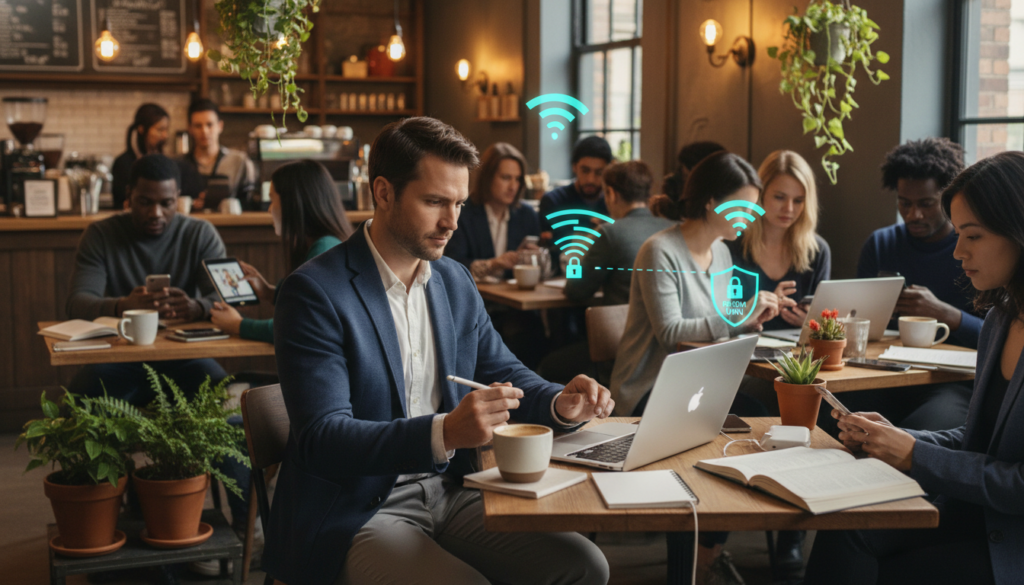
Public Wi-Fi networks pose risks like packet sniffing and rogue hotspots. In places like airports, hotels, and cafes, you’re often unsure who else is on the network. This is where a VPN for public Wi-Fi proves its value.
A VPN encrypts your connection, safeguarding your data on untrusted networks. It minimizes the risk of someone intercepting your communications, especially when accessing sensitive information on the go.
Remote Work, Mobile Use, and Everyday Scenarios Where a VPN Adds Security
Many Americans work online, often across different networks. Freelancers and families with multiple devices online face unique risks. A VPN can protect your data when accessing financial accounts or work dashboards away from home.
Consistency is key. Turning on a VPN before connecting ensures secure browsing habits, even when your network changes.
VPN Limitations: What a VPN Does Not Protect You From
A VPN is not a panacea. It won’t shield you from tracking based on logged-in accounts, cookies, or browser fingerprinting. It also can’t prevent malware, phishing, or unsafe downloads.
Even with a no-logs VPN, anonymity is not absolute. Identity can still leak through behavior, accounts, and device signals. Combine a VPN with multi-factor authentication, strict browser settings, and careful app permissions to reduce broader risks.
Choosing a Trustworthy Provider: Transparency, Logging Policies, and Reputation
Not all VPN services are created equal. Look for transparency in ownership, operations, and request handling. A reliable service should clearly explain its logging policies, including what data is retained and what is not, to align with your privacy needs.
Also, prioritize modern encryption, a kill switch, and DNS leak protection. Public documentation is essential for ongoing evaluation. When considering VPNLY, visit vpnly.com to review policy details and compare them against these standards, including the definition and support for no-logs VPN claims.
Conclusion
Online privacy protection is no longer confined to local boundaries. Data collection, ad tech, and digital surveillance traverse borders in mere seconds. The integration of AI identification and relentless cybercrime has transformed personal data into a global target.
Utilizing a VPN is a practical step towards safeguarding your online presence. It minimizes network-level tracking by your ISP and enhances security on public Wi-Fi networks. However, it is crucial to understand that a VPN does not offer complete protection against all trackers, login leaks, or risky clicks.
For comprehensive protection, adopting a multi-layered approach to privacy is essential. This includes using a VPN, practicing secure browsing, setting strict app permissions, enabling multi-factor authentication (MFA), and keeping software up to date. These habits significantly reduce your vulnerability to common attacks.
When evaluating VPN services, it is vital to scrutinize their policies, encryption standards, and transparency regarding logging practices. Apply these criteria when considering options like VPNLY at vpnly.com. Making informed choices and adhering to daily privacy practices are crucial for maintaining robust online privacy protection.