Mahjong: Complete Guide to Rules, Tiles, Winning Hands, and Strategy
Introduction
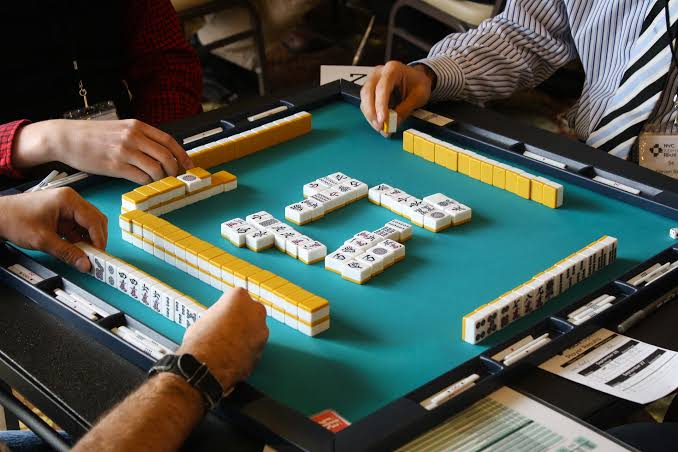
Mahjong is a traditional tile-based game that blends strategy, probability, observation, and luck into an experience that’s surprisingly deep. Although the game originated in China, mahjong is now enjoyed internationally, with Chinese, Japanese, American, and other regional variations developing their own distinctive rules. Those unfamiliar symbols and neatly arranged tiles might look intimidating at first, but the basic gameplay is actually quite approachable once you understand the structure.
In a typical game, players draw and discard tiles while trying to complete a legal winning hand. The challenge isn’t simply finding matching tiles. You need to decide which combinations to pursue, recognize useful patterns, and watch what your opponents are doing. This guide explains how mahjong works, introduces the main tiles and combinations, covers the basic rules, and explores practical strategies for beginners. Learn the foundations first and the complicated scoring stuff becomes much less scary later.
Key Takeaways
- Mahjong is traditionally a four-player strategy game played with tiles.
- Mahjong tiles include numbered suits, Winds, Dragons, and sometimes bonus tiles.
- Winning hands commonly require four sets and a pair, depending on the variation.
- Sequences generally consist of three consecutive numbered tiles from the same suit.
- Strategy involves improving your hand while carefully observing opponents’ discards.
- Mahjong variations use different scoring systems, special hands, and winning requirements.
What Is Mahjong?
Mahjong is a competitive tile game in which players build combinations by drawing and discarding tiles. The objective is generally to complete a valid hand before your opponents, although the exact requirements depend on the ruleset you’re playing.
A traditional game usually has four players. Throughout a hand, each player works with concealed tiles while selected combinations may become visible after certain tiles are claimed.
What makes mahjong particularly interesting is the amount of information available around the table. Every discard can potentially reveal something about a player’s intentions.
As your experience increases, you begin thinking beyond your own combinations. Is an opponent collecting one particular suit? Which tiles appear safe to discard? Should you continue pursuing an ambitious hand or settle for a faster option?
These decisions transform relatively simple draw-and-discard mechanics into a game with substantial strategic depth.
Understanding the Different Mahjong Tiles
Learning the tiles is the natural starting point for any mahjong beginner. While designs vary between sets, traditional mahjong commonly features three numbered suits alongside honor tiles.
The numbered suits are Bamboo, Characters, and Dots/Circles. Each runs from one through nine, with multiple copies of each tile.
Honor tiles consist of four Winds—East, South, West, and North—and three Dragons, typically identified as Red, Green, and White.
Some sets additionally contain Flowers and Seasons. Their role varies depending on the version being played.
| Tile Category | Examples | Typical Use |
|---|---|---|
| Bamboo | 1–9 Bamboo | Sequences and matching groups |
| Characters | 1–9 Characters | Sequences and matching groups |
| Dots | 1–9 Dots | Sequences and matching groups |
| Winds | East, South, West, North | Matching groups and scoring |
| Dragons | Red, Green, White | Matching groups and scoring |
| Bonus tiles | Flowers, Seasons | Special bonuses in some variations |
Numbered Suits and Honor Tiles
Numbered tiles offer considerable flexibility because they can contribute to both sequences and matching groups. If you hold 4 and 5 Bamboo, for example, several future draws could potentially improve that combination.
A sequence normally uses three consecutive numbers belonging to the same suit, such as 3-4-5 Dots. You can’t combine 3 Bamboo, 4 Characters, and 5 Dots simply because their numbers are consecutive. The suit matters.
Matching sets instead use identical tiles. Three Red Dragons are an example, as are three identical 7 Character tiles.
Honor tiles work differently because Winds and Dragons don’t form numerical sequences. Their usefulness generally comes from creating pairs or matching sets and satisfying scoring conditions under particular rulesets.
Beginners sometimes become emotionally attached to honor tiles because, well, Dragons sound important. But an isolated Dragon isn’t automatically useful. Mahjong rewards evaluating how effectively each tile connects with the rest of your hand rather than keeping something because it looks impressive.
How to Play Mahjong for Beginners
The exact rules vary, but the central gameplay loop is remarkably easy to understand. Players begin with a starting hand and take turns drawing and discarding tiles.
During your normal turn, you draw a tile and decide whether it improves your hand. You then discard a tile, leaving you ready for the next cycle.
Under many rulesets, another player may sometimes claim a discard to complete an allowed combination. Specific restrictions determine who can claim which tiles and under what circumstances.
A simplified mahjong turn follows this pattern:
- Draw one tile.
- Examine your potential combinations.
- Decide which tiles provide the best possibilities.
- Discard an unwanted tile.
- Observe opponents’ actions.
- Repeat until someone completes a legal hand.
You don’t need advanced scoring knowledge to start recognizing these patterns. Concentrate initially on understanding tile relationships and the flow of play.
How Do You Make a Winning Mahjong Hand?
Under many common rulesets, a standard winning hand is built from four sets and one pair. However, special hands and variant-specific requirements can change this structure.
A set may be a sequence of three consecutive suited tiles or a group of three identical tiles. Four identical tiles can form another special group, usually called a kong or equivalent term depending on the variation.
Imagine building a hand containing:
- 2-3-4 Bamboo
- 5-6-7 Characters
- Three 8 Dots
- Three Green Dragons
- Two matching Character tiles
Structurally, that illustrates the familiar four-sets-and-a-pair pattern.
However, structure isn’t always enough to declare victory. Certain versions require your hand to satisfy additional scoring conditions. Japanese riichi mahjong, for instance, has specific requirements that beginners need to learn separately.
That’s why you should choose one ruleset rather than mixing instructions from different mahjong traditions. The tiles may look similar while the winning requirements can be quite different.
Mahjong Strategy and Tips for Beginners
Good mahjong strategy starts with making your hand flexible. Rather than immediately deciding what your final hand must look like, evaluate which tiles offer the greatest number of useful future draws.
Connected numbered tiles are often valuable. For instance, holding 4-5 provides more potential development than holding two unrelated tiles such as 1 and 9 from different suits.
Pairs also deserve attention because they can potentially become matching sets or provide the final pair needed for your hand.
At the same time, don’t become so focused on your tiles that you ignore everyone else. Watch which tiles opponents discard and which combinations they expose.
As a hand develops, defensive decisions become increasingly important. The best discard for improving your own efficiency may not always be the safest tile to give an opponent.
Improve Your Game by Watching Discards
Mahjong gives players a valuable source of public information: the discard area. Paying attention to it can help you understand which tiles remain available and what your opponents might be pursuing.
Suppose an opponent consistently throws away Bamboo tiles while exposing combinations involving Characters. That doesn’t prove exactly what their remaining hand contains, but it provides information you can consider when making decisions.
As the game approaches its final stages, observation becomes particularly important. An opponent who appears close to winning may make certain discards considerably more dangerous.
Experienced players therefore balance offense and defense. Sometimes you should continue developing your hand aggressively. In other situations, reducing the chance of dealing a winning tile to an opponent is more important.
Don’t worry if this feels overwhelming during your first games. Start by simply noticing the discarded tiles instead of staring exclusively at your own hand. Gradually, you’ll begin spotting patterns without consciously forcing it.
Popular Mahjong Variations Around the World
Mahjong isn’t governed by one universal set of rules. Different regions and communities have developed versions with distinct scoring systems, terminology, winning conditions, and special mechanics.
Hong Kong mahjong is one widely recognized variation and maintains many traditional features. Other Chinese regional systems introduce their own scoring patterns and requirements.
Japanese riichi mahjong has become popular internationally, particularly through digital games. It includes mechanics such as riichi declarations and a detailed scoring framework.
American mahjong differs substantially from many Asian versions. It commonly uses tile racks, jokers, and standardized combinations specified through a hand card.
Taiwanese, Singaporean, Malaysian, Korean, and other variations add still more diversity.
Beginners don’t need to learn all of them. Find out which version your friends, local club, or preferred online platform uses and concentrate on that ruleset first. Once the fundamentals become automatic, learning another mahjong variation becomes much easier.
Conclusion
Mahjong combines accessible basic mechanics with enough strategic depth to keep players learning for years. Start by recognizing Bamboo, Character, Dot, Wind, and Dragon tiles. Then practice identifying sequences, matching sets, and pairs while becoming comfortable with the basic draw-and-discard cycle. Those foundations make advanced concepts far easier to understand.
The best way to improve at mahjong is to play regularly and pay attention to your decisions. Don’t judge a session entirely by whether you won. Notice which tiles gave your hand flexibility, which discards created problems, and what your opponents revealed through their actions. Choose one mahjong variation, learn its scoring system gradually, and give yourself time to develop pattern recognition. Eventually, the tiles stop looking like mysterious symbols and start looking like opportunities.
FAQs
How old is the game of mahjong?
Modern mahjong developed in China, with its recognizable form generally associated with the 19th century. Its precise origins are debated, and various stories surround its creation. The game later spread internationally and developed into the numerous regional variations played today.
Do you need a special table to play mahjong?
No. A standard table with enough space for four players, tiles, and discards can work perfectly well. Specialized automatic mahjong tables exist and can shuffle and arrange tiles, but they’re a convenience rather than a requirement for traditional play.
Can three people play mahjong?
Yes, dedicated three-player mahjong variations exist. They usually modify the tile set, turn structure, scoring, or other rules to accommodate fewer players. It’s better to follow an established three-player ruleset rather than simply removing one person from four-player mahjong.
What is a mahjong wall?
The wall is the organized arrangement of face-down tiles from which players draw during a hand. Players traditionally build tiles into stacked rows before play begins. The precise wall setup and drawing procedure depend on the mahjong variation being used.
Can mahjong help improve strategic thinking?
Mahjong involves memory, pattern recognition, probability, observation, and decision-making. Playing regularly can exercise these skills, although it shouldn’t be treated as a guaranteed method of improving general cognitive ability or preventing age-related cognitive conditions.
Are mahjong and mahjong solitaire the same game?
No. Traditional mahjong is a competitive multiplayer game where players draw and discard tiles to build hands. Mahjong solitaire is a single-player matching puzzle in which exposed identical tiles are removed from a layered layout. They mainly share the visual appearance of the tiles.