Ethereum Casinos: The Next Step for Crypto Gambling
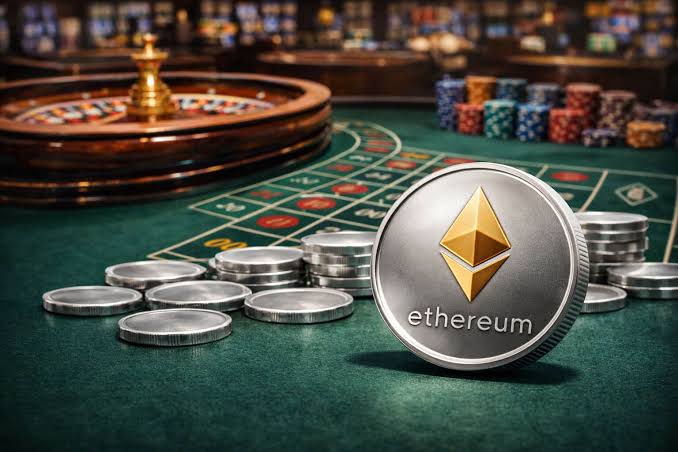
The useful thing about an ETH deposit is not that it sounds modern. It is that the payment leaves a receipt outside the casino’s own system. A player can open a block explorer and see where the funds went, how much gas was charged, and whether the network accepted the transfer. Card payments rarely offer that kind of direct view. Still, a green successful label does not always put money into the playable balance at once. The casino must detect the payment and connect it to the correct account. Ethereum casino payments are becoming more common because they make the transfer easier to trace, not because they remove every delay or disagreement that can follow it.
Why Ethereum Casino Payments Need Two Records
Every ETH deposit creates two versions of events. The blockchain records a transfer between addresses. The casino records a credit assigned to a user. Usually, they agree without attracting attention. When they do not, the distinction becomes important. A person exploring an ethereum casino can copy the receiving address before paying and compare it with the destination shown in the wallet. After sending, the transaction hash provides an independent record. This is one practical advantage of a crypto-first platform: a user does not have to rely only on an entry in the cashier history. The transfer can be checked elsewhere, although the internal balance remains under the platform’s control.
| Record | What It Shows |
| Wallet activity | Amount sent, destination, and network fee. |
| Block explorer | Transaction status and block information. |
| Casino cashier | Deposit request and account credit. |
| Support ticket | How the platform handles a mismatch. |
This separation also prevents a common misunderstanding. Successful on Ethereum means the network executed the transfer. It does not necessarily mean that the casino recognized the deposit, accepted its amount, or attached it to the intended account.
From a String of Characters to Playable Funds
A payment begins with an address that is long enough to discourage careful reading. That is exactly why it deserves attention. Wallet malware can replace copied addresses, while using the wrong network may send funds along a route the platform does not monitor. Once approved, the transaction is broadcast and waits for a validator to include it in a block. The casino may require further confirmations before crediting the balance. Ethereum’s official transaction guide describes the network stages separately: broadcast, inclusion, justification, and finalization. The casino adds another stage of its own after watching the relevant address.
The safest order is not complicated:
- Create a new deposit request. Reusing an older instruction introduces unnecessary doubt.
- Match the asset and network. ETH displayed in a wallet can exist across more than one network.
- Compare the complete address. A quick glance at four characters is not a full check.
- Review the gas estimate. It sits outside the amount intended for the casino balance.
- Save the transaction hash. It becomes the reference if the credit fails to appear.
A modest first transfer is useful here. It checks the entire route with less money exposed. The second deposit may feel repetitive, but repetition is cheaper than discovering that the first address or network choice was wrong after sending a large amount.
Smart Contract Transparency Has Edges
The words smart contract often appear beside promises of transparency, yet the connection is not automatic. A contract can make its activity public because calls and state changes are recorded on Ethereum. If the source code has been verified, it may also be possible to examine the functions behind those calls. That tells users something concrete. It still does not reveal decisions made in a private casino database. Account restrictions, identity checks, promotional balances, manual reviews, and withdrawal approval can all happen away from the blockchain. A platform may use Ethereum for payment while keeping nearly every other operation off-chain.
| Action | System Used | Visible Information | Missing Information |
| Basic ETH deposit | Ethereum | Sender, receiver, value, gas | Intended casino account |
| Contract interaction | Smart contract | Address, call, recorded result | Clear meaning without verified code |
| Balance update | Casino database | New account balance | Internal matching logic |
| Withdrawal approval | Casino and Ethereum | Payment after broadcast | Earlier review decisions |
There is another catch. Public code is not necessarily understandable code, and understandable code is not necessarily secure. The Ethereum smart contract documentation notes that interactions cannot normally be reversed. A faulty contract can therefore be completely visible and still produce an unwanted result. Transparency supplies evidence; it does not supply judgment.
Ethereum Casino Payments Do Not Run on One Clock
Speed claims often begin with a block and end with a confirmation. A player experiences more than that. First comes the pending period. Next comes the number of confirmations required by the platform. Then the casino updates its own ledger. A larger priority fee may influence how quickly validators consider the transaction during congestion, but it cannot speed up a delayed account review. For that reason, ethereum casino payments should not be described by one universal settlement time. Network conditions change, and casino policies differ.
Gas causes a similar problem because users sometimes treat it as a fixed charge. It is the cost of getting computation performed on Ethereum, and it moves with demand. A contract call normally uses more gas than a plain ETH transfer because it asks the network to execute additional instructions. A failed contract operation may also consume gas. The work was attempted even though the requested result did not occur.
Before sending funds, check:
- The asset and network named on the deposit page.
- The minimum amount the casino will recognize.
- The gas estimate shown by the wallet.
- The platform’s required confirmation count.
- The expected time for internal crediting.
- The support procedure for a missing balance.
These points are more useful than a general promise of fast deposits. They show where waiting may occur and which party controls each part.
The Transaction Hash Is the Part Worth Keeping
Ethereum transfers used for casino deposits are difficult to undo, but they are comparatively easy to trace. That tradeoff explains much of their appeal. When funds fail to appear, the transaction hash can establish whether the wallet sent them, which address received them, and whether the network completed the transfer. It cannot settle every dispute. It gives the conversation a factual starting point.
This is also why nobody investigating a payment needs a private key or recovery phrase. A transaction hash is public. A seed phrase is not. Any request for the latter should end the conversation immediately. The same caution applies to addresses sent through unofficial messages. Deposit details belong inside the authenticated account.
The case for Ethereum-based casino payments is therefore narrower than much of the marketing suggests, but it is still solid. Players gain direct wallet access and an independently searchable payment trail. Platforms gain a payment rail that can operate without card processing. Both sides inherit irreversible transfers, changing gas costs, and the need to explain what happens after the blockchain has done its part. The technology works best when that boundary is visible before any ETH leaves the wallet.