Are UTM Firewalls the Answer to Overcomplicated Cybersecurity Stacks?
Modern cybersecurity has become increasingly complex. Organizations often rely on a patchwork of tools, including antivirus software, intrusion detection systems, web filters, VPNs, and more. While each solution serves a purpose, managing them all together can quickly become overwhelming.
This complexity introduces its own risks. Multiple systems can lead to gaps in protection, inconsistent policies, and slower responses to threats. IT teams may spend more time managing tools than actually improving security. As cyber threats evolve, here’s why many organizations are beginning to question whether a simpler, more unified approach might be more effective.
What Are UTM Firewalls?
Unified Threat Management, commonly referred to as UTM, is designed to consolidate multiple security functions into a single platform. Instead of deploying separate tools for each task, a UTM firewall combines features such as:
- Firewall protection
- Intrusion prevention
- Antivirus and anti-malware scanning
- Content and web filtering
- VPN support
This integrated approach aims to simplify network security while maintaining a strong level of protection. By bringing everything into one system, organizations can manage their security more efficiently and reduce the likelihood of misconfigurations.
The Appeal of Simplification
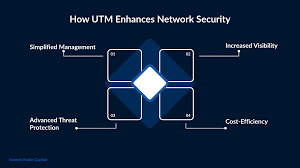
One of the biggest advantages of UTM firewalls is their ability to reduce complexity. Managing a single, unified system is often far easier than coordinating multiple standalone solutions. With fewer tools to oversee, IT teams can apply consistent security policies across the network, monitor threats from a centralized dashboard, and respond more quickly to incidents. They can even reduce the risk of configuration errors. Simplification also makes it easier for smaller organizations to maintain strong security without needing large, specialized teams.
Do UTM Firewalls Compromise on Performance?
A common concern is whether combining multiple functions into one system affects performance. Early UTM solutions sometimes struggled with this, particularly under heavy network loads.
However, modern UTM firewalls are designed to handle high traffic volumes efficiently. Advances in hardware and software optimization have significantly improved their ability to process multiple security functions simultaneously without causing bottlenecks.
That said, performance still depends on choosing the right solution for your environment. Organizations must therefore ensure that the firewall is properly sized and configured to meet their specific needs.
Balancing Breadth and Depth of Security
While UTM firewalls offer a wide range of features, some companies worry that they may not provide the same depth as specialized tools. Dedicated systems can sometimes offer more advanced capabilities in specific areas. The key is to evaluate whether the integrated features meet your security requirements. For many organizations, particularly small to medium-sized businesses, the breadth of protection offered by a UTM solution is more than sufficient. In environments with highly specialized needs, a hybrid approach may still be necessary, combining UTM with additional targeted tools.
Cost and Operational Efficiency
Another major benefit of UTM firewalls is cost efficiency. Instead of purchasing and maintaining multiple products, businesses can invest in a single solution that covers a wide range of security needs. This can lead to:
- Lower upfront costs
- Reduced licensing and maintenance expenses
- Less time spent on training and management
Operational efficiency also improves, as teams can focus on strategy and threat response rather than juggling multiple systems.
A Practical Approach to Modern Security
For organizations looking to streamline their cybersecurity approach, UTM Firewalls from watchguardonline.co.uk represent an example of how integrated solutions can simplify protection while maintaining strong security standards. By combining multiple layers of defence into a single platform, they help reduce complexity without sacrificing control.
Are UTM Firewalls the Complete Answer?
UTM firewalls are not a one-size-fits-all solution. While they address many challenges associated with complex security stacks, they may not fully replace every specialized tool in larger or highly regulated environments. However, they do offer a compelling alternative to overly complicated setups. By consolidating key security functions, they reduce the risk of gaps and make it easier to maintain a consistent security posture.
Conclusion
The increasing complexity of cybersecurity has made it harder for organizations to stay protected. While adding more tools might seem like the answer, it often creates new challenges. UTM firewalls provide a different approach, focusing on integration and simplicity. For many organizations, they strike a balance between comprehensive protection and manageable operations.