Online Services Are Moving Away From Fixed Features Toward Personalized User Accounts
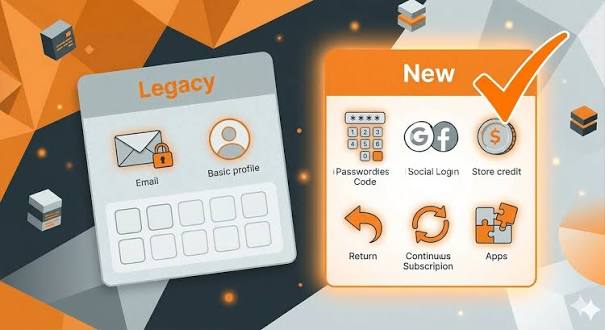
Static menus and one-size-fits-all feature sets are losing ground across online services. Users now expect platforms to remember how they work, what they return to, and which tools matter most in a given moment. That shift has changed product design at a deeper level. Instead of building a single interface for everyone, companies are developing account-based systems that adjust content, pricing, and workflows around individual preferences.
The result is a more flexible model in which two people can use the same service but encounter different recommendations, tools, and account settings.
Algorithmic Content and Workflows Are Reshaping Account Design
Beyond social media feeds, productivity apps, e-commerce stores, and streaming platforms now tailor search results, templates, shortcuts, and recommendations around individual habits. These systems analyze previous interactions to determine which content or functions should appear first. Notion, Grammarly, and Amazon demonstrate how account preferences can influence suggested tools, writing assistance, and product discovery.
The same approach is increasingly visible in online gaming. Platforms can use account histories to recommend particular genres, highlight recently accessed titles, and organize game libraries around individual interests. Some services also adjust homepage sections to make frequently used features easier to find.
Casino gaming follows a similar model, with online platforms using account information to personalize game recommendations and promotional content. Instead of displaying identical offers to every player, some operators segment promotions according to account activity and eligibility. This can extend to casino bonus options, including welcome packages, free spins, and offers for existing players.
Personalization Is Replacing Standard Feature Sets
Older service models were built around equal access to identical tools. Every user opened the same dashboard, saw the same navigation, and moved through the same product structure. That format was easier to maintain, but it often buried frequently used features beneath functions that received little attention. Personalized accounts address this problem by changing the order of available tools and bringing common actions closer to the homepage.
Generative AI has expanded these possibilities because it allows software to respond to requests and account context. Suggested actions can reflect previous tasks, while templates can be adapted to particular writing styles or project requirements. Notion, for example, allows users to organize workspaces around their preferred databases, documents, and project structures.
However, not every personalized interface operates automatically. Many services still depend on manually configured dashboards, saved preferences, and predefined recommendation rules. The broader development involves combining these established methods with newer AI capabilities. Rather than replacing every fixed feature, platforms increasingly adjust how existing functions are presented according to individual needs.
Pricing Models Are Becoming Account-Specific
Personalized accounts are also changing how online services charge for access. Traditional Basic, Pro, and Enterprise subscriptions remain common, but companies increasingly supplement them with usage-based charges. AI credits, additional storage, automation capacity, and specialized integrations can be purchased separately, allowing customers to adjust their spending according to actual requirements.
OpenAI’s API pricing provides one example of consumption-based billing, with charges connected to model usage rather than a single universal subscription. Cloud services such as Amazon Web Services also calculate many charges according to resources consumed, including computing capacity, storage, and data transfers.
Personalization in financial services follows a related principle, although the commercial structure differs. Betterment and Wealthfront use information about financial objectives and risk preferences to help construct investment portfolios. Stitch Fix combines customer style preferences with feedback from previous purchases to recommend clothing.
These examples demonstrate different forms of account-specific service delivery. Some customize pricing through usage, while others adjust products and recommendations. Both approaches reduce dependence on identical packages for every customer.
Cross-Device Continuity Has Become a Core Expectation
Users regularly switch between desktop computers, smartphones, tablets, and other connected devices. Personalized accounts help preserve settings, saved content, and unfinished activities across these environments. Without account synchronization, users would need to repeat searches, recreate preferences, or manually transfer information whenever they changed devices.
Google Chrome demonstrates this through account-based synchronization of bookmarks, passwords, and other supported settings. Microsoft OneDrive allows documents to remain accessible across different devices, while Spotify maintains playlists, listening histories, and saved music through individual accounts.
These systems depend on cloud infrastructure that connects information to an account rather than storing everything on one device. Changes made in one location can then become available elsewhere, subject to synchronization settings and connectivity.
Cross-device continuity also influences interface design. A desktop application may display several tools simultaneously, while its mobile equivalent prioritizes fewer controls. Although the presentation changes, the underlying account information remains consistent. This allows platforms to adapt to different screen sizes without requiring users to rebuild their personal settings.
Business Strategy Now Starts With User Data Structures
As online services become more personalized, account architecture has a greater influence on product development. Companies need systems capable of storing preferences, organizing activity histories, and making relevant information available to recommendation engines and interface components. A user profile therefore serves purposes beyond authentication, billing, and customer identification.
Different types of information support different functions. Explicit preferences record choices made directly by users, while behavioral signals can indicate frequently accessed features or recurring activities. Recommendation systems may combine both categories to determine which products, content, or tools should appear prominently.
However, collecting more information does not automatically produce better personalization. Outdated activity records, incorrect assumptions, and poorly organized profiles can generate irrelevant suggestions. Companies must also distinguish between temporary interests and lasting preferences.
For example, a single product search should not necessarily outweigh months of established purchasing patterns. Effective account systems need methods for updating recommendations as behavior changes. This makes data quality, profile maintenance, and recommendation accuracy important considerations in long-term product development.
The Competitive Edge Now Comes From Relevance
Online services have traditionally competed by expanding their feature lists. Additional tools, integrations, and content categories helped distinguish products, but they also increased interface complexity. Users can struggle to locate familiar functions when every new addition receives equal prominence. Personalized accounts offer an alternative by organizing existing capabilities according to individual priorities.
This approach is particularly useful for platforms serving different customer groups. A project management application may support freelancers, marketing agencies, and large organizations, yet each group relies on different functions. Personalized dashboards can emphasize individual task lists for one account and team reporting tools for another.
Relevance also depends on allowing users to correct automated recommendations. Saved preferences, adjustable dashboards, and controls for hiding unwanted suggestions help prevent personalization from becoming restrictive.