Why an Increasing Number of Architects Are Specifying Steel Doors for Internal Spaces and Corridors
Door specification can have a significant impact on how well a building performs over its lifetime. In busy commercial, industrial and public buildings, internal doors need to cope with frequent use while meeting the practical and visual requirements of the wider design.
For these reasons, architects are increasingly considering steel doors for internal spaces and corridors. Once associated primarily with external entrances, plant rooms and industrial environments, steel doors can provide a practical solution for many areas within modern buildings.
Durability in High-Traffic Areas
Internal corridors can be among the busiest parts of a building. In schools, hospitals, offices, apartment blocks and public facilities, doors may be opened, closed and occasionally knocked or pushed hundreds of times during a typical day.
Steel is particularly well suited to these demanding environments. Its strength and resistance to everyday impacts can help doors retain their integrity where less robust alternatives may require more frequent repairs or replacement.
For architects, specifying durable materials at the design stage can also support a building’s long-term maintenance strategy.
A Practical Choice for Different Building Types
Versatility is another reason steel doors are appearing in a wider range of internal specifications. Different projects bring different requirements, from controlling access between areas to creating practical doors for service corridors, storage areas and back-of-house spaces.
Purpose-designed internal steel doors can therefore be considered across numerous commercial and public-sector applications, rather than being limited to traditionally industrial settings.
This flexibility can be particularly useful on larger projects where architects need to maintain consistency across multiple areas while accommodating different functional demands.
Supporting Fire and Security Strategies
Door specification is also closely connected with a building’s wider fire safety and security strategy. Depending on the product and its certification, steel door assemblies can be specified to meet particular performance requirements.
This makes it possible for architects and specifiers to select appropriate doors according to the needs of individual locations within a building. Corridors, restricted areas and service spaces, for example, may each have distinct requirements.
Crucially, performance should always be assessed using the relevant product documentation, testing and certification rather than assuming that every steel door provides the same characteristics.
Design No Longer Has to Be an Afterthought
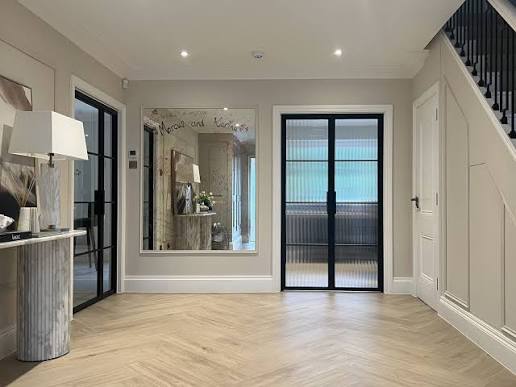
Practicality does not necessarily mean compromising the appearance of an interior. Contemporary steel doors are available in different finishes and configurations, allowing them to sit more comfortably within a considered architectural scheme.
For corridors and functional spaces, a clean and understated door design can complement the surrounding interior without drawing unnecessary attention to itself.
Considering the Whole-Life Value
Initial material cost is only one consideration when specifying building components. Architects and project teams increasingly have to think about durability, maintenance and replacement over the building’s expected lifespan.
A robust door that can withstand intensive use may reduce the need for repeated remedial work. For facilities teams managing large estates, that can be an important practical consideration.
Steel doors will not be the right solution for every internal opening. However, their combination of durability, versatility and potential performance options explains why they are increasingly being considered for corridors and other demanding internal spaces. For architects balancing appearance with long-term practicality, steel is becoming a material worth considering well beyond the building’s exterior.