How does an HVAC Contractor evaluate airflow restrictions in Residential Duct Systems?
A heating and cooling system can be running every day and still fail to make a house feel comfortable. The problem is often blamed on the thermostat or the equipment itself. Yet, many comfort complaints actually begin in the duct system, where conditioned air is slowed, lost, or unevenly delivered before it ever reaches the rooms that need it.
That is why airflow evaluation matters. In residential properties, duct restrictions can create hot bedrooms, cold back rooms, stale offices, and a system that seems to run longer than it should. An HVAC contractor does not approach that problem by guessing from a vent cover or relying on one quick visual check. The process is more disciplined. It involves examining how air moves through the system, where resistance develops, and which parts of the duct network are limiting comfort throughout the home.
Where Airflow Problems Begin
- Room Complaints Reveal Useful Patterns
An airflow evaluation often starts with what residents are already experiencing. One room may stay warm every summer afternoon, another may feel stuffy with the door closed, and a far bedroom may lag behind the rest of the house in both heating and cooling seasons. These complaints are not random. They often point toward where the duct system is underperforming and whether the issue involves supply air, return air, or general circulation weakness.
A contractor pays close attention to those patterns because the way a home feels room to room often reveals more than a glance at the equipment ever could. In many homes, the first useful clues come from noticing which spaces struggle most, how long the problem has existed, and whether it worsens with doors shut, weather extremes, or changes in occupancy. In markets where comfort complaints are tied closely to mixed seasonal demand, Local Heating Contractor in Portland, OR conversations often include this kind of room-by-room review because airflow restrictions usually show up through lived experience before they are confirmed through testing. Those patterns help shape the rest of the evaluation and keep the contractor focused on real distribution problems instead of broad assumptions.
- Static Pressure Shows System Resistance
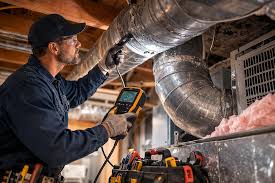
One of the most important steps in evaluating airflow restrictions is checking static pressure. Static pressure reflects how hard the air handler has to work to move air through the system. When the pressure is too high, it often means the system is pushing against resistance somewhere along the path. That resistance could come from restrictive duct design, dirty filters, blocked coils, undersized returns, closed dampers, or duct runs that have become crushed, kinked, or otherwise compromised over time.
This measurement matters because it gives the contractor a broader view of the system’s stress. A house may have rooms that feel uneven for months or years, but static pressure helps confirm whether the system is struggling at a whole-house level rather than only in isolated spots. It is one of the clearest ways to distinguish between an equipment issue and a distribution issue. If pressure is elevated, the next step is not to guess. It is to determine exactly where the resistance is building and how much of the airflow problem is tied to the duct system rather than to heating or cooling output alone.
- Supply Ducts Need More Than A Glance
Supply ducts are one of the first places a contractor examines when airflow seems weak or uneven. The evaluation is not limited to whether ducts exist and appear connected. It focuses on how those ducts are routed, sized, supported, insulated, and joined. Long runs, sharp turns, sagging flex duct, undersized branches, and poorly sealed transitions can all reduce the amount of conditioned air that reaches the room. In some cases, earlier remodeling work may have introduced awkward branch connections or crushed sections that are hidden above ceilings or in attic spaces.
A contractor looks for these details because airflow restrictions are often physical in nature. Air may be available at the equipment, but the path it must follow may narrow, leak, or become increasingly resistant before the air reaches the register. This is why two rooms in the same house can behave very differently, even when they are served by the same system. The supply side is not just about volume leaving the air handler. It is about whether the duct network can deliver that air efficiently to each room without excessive loss or resistance along the way.
Better Comfort Starts With Better Diagnosis
An HVAC contractor evaluates airflow restrictions in residential duct systems by examining the full path air takes through the home. That includes room complaints, static pressure, supply ducts, return pathways, balancing components, maintenance conditions, and leakage points that weaken delivery before the air ever reaches the space. The goal is not to assume the equipment is the problem or to blame the ductwork in broad terms. It is to identify where air is being slowed, blocked, lost, or misdirected.
That process matters because room comfort depends on more than whether the system turns on. It depends on whether conditioned air can move through the house with the right volume, balance, and circulation. When airflow restrictions are evaluated carefully, the solutions become more practical and more effective. Instead of chasing symptoms from room to room, the homeowner gets a clearer understanding of what is actually limiting comfort and how the system can be improved without guesswork.