The Hidden Costs of Traditional Compliance Training in Manufacturing

Traditional compliance training in manufacturing often appears straightforward but carries hidden costs that impact efficiency, engagement, and overall company performance. These costs go beyond the obvious expenses of materials and instructor time, affecting productivity and employee morale.
The most significant hidden cost is lost time spent on repetitive, generic training that does not address specific operational risks or knowledge gaps. This leads to less effective learning and longer periods before compliance goals are truly met.
Understanding these underlying costs is essential for manufacturers aiming to optimize their training investments and reduce harm to both workflow and compliance outcomes.
Understanding Traditional Compliance Training in Manufacturing
Traditional compliance training in manufacturing involves structured programs designed to meet regulatory standards and workplace safety. It often includes mandatory sessions covering legal requirements, safety protocols, and company policies that workers must complete regularly.
These training methods rely heavily on classroom-style instruction, standardized testing, and fixed schedules. Conflict resolution training may be part of the curriculum to address workplace disputes and maintain a safe environment.
Overview of Compliance Training Approaches
Most traditional training uses in-person lectures or computer-based modules with limited interaction. Employees often follow predetermined timelines, repeating content annually regardless of prior knowledge or role-specific risks.
Assessments typically consist of multiple-choice tests focused on regulatory compliance rather than practical skills. This approach may result in disengagement and minimal retention of critical safety or conflict resolution techniques.
Training sessions tend to be standardized across job functions instead of tailored to individual roles, neglecting specific hazards employees might face on factory floors.
Key Requirements for Manufacturing Compliance
Manufacturing compliance emphasizes adherence to OSHA regulations, environmental laws, and internal safety policies. Training must cover hazard communication, machine operation safety, and emergency response procedures.
Conflict resolution is also crucial, as unresolved disputes can impact safety and productivity. These sessions teach employees to identify workplace conflicts and apply appropriate communication strategies.
Documentation and tracking of training completion are mandatory, ensuring all employees meet regulatory deadlines and standards. Records are audited frequently to avoid fines or shutdowns due to non-compliance.
Direct and Indirect Costs of Traditional Compliance Training
Traditional compliance training in manufacturing involves several cost factors beyond the obvious fees. These include expenses related to training materials, lost productive hours, and the time spent managing the process.
Training Delivery Expenses
Costs for delivering compliance training typically include instructor fees, printed materials, and venue rental. In-person sessions often require external trainers whose rates vary but add significantly to expenses.
Companies also spend on outdated manuals or binders that need regular updates. These materials can be costly to produce and replace with every regulation change.
Equipment and safety gear used during training contribute to expenses. Additionally, travel and accommodation for trainers and participants inflate the training budget.
Downtime and Lost Productivity
During traditional training, employees are often pulled off the production line, leading to direct productivity losses. Hours spent in classrooms or workshops are hours not producing.
In some cases, manufacturing output decreases by as much as 10-15% during extended training periods. This downtime interrupts workflow and may delay deliveries.
Recovery times post-training can further extend productivity losses. Workers need time to adjust or refresh their tasks after instructional sessions.
Hidden Administrative Overheads
Managing compliance training involves significant administrative effort. Coordinators must schedule sessions, track attendance, and ensure regulatory standards are met.
Record keeping for audits and certifications adds to the workload. Manual data entry and follow-up communications consume staff time that could be allocated elsewhere.
Updating training content to keep up with changing laws requires staff with specialized knowledge. These indirect costs often go unnoticed until a budget review.
Traditional compliance training in manufacturing often involves significant hidden costs beyond obvious expenses. Direct costs include materials, instructor fees, and lost production time as employees attend lengthy, in-person sessions. Indirect costs can be even more impactful, such as decreased employee engagement, low knowledge retention, and higher error rates due to ineffective training delivery. These factors contribute to reduced overall productivity and increased risk of non-compliance.
Long-Term Organizational Impact of Outdated Training Methods
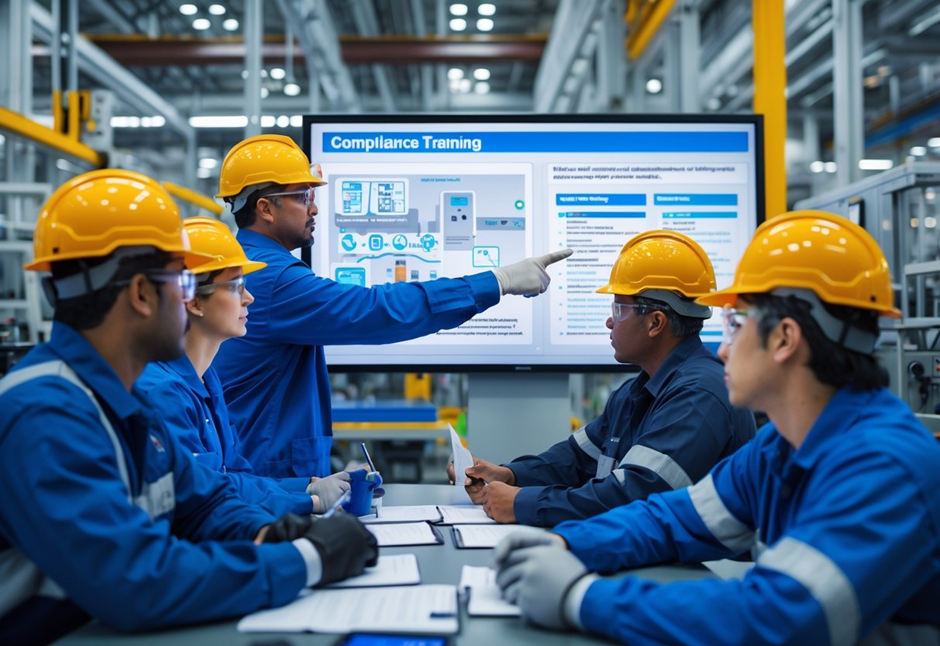
Outdated compliance training in manufacturing creates knowledge gaps, increases compliance risks, and lowers worker engagement. These factors together slow productivity and raise costs over time.
Inconsistent Knowledge Retention
Traditional training often relies on infrequent lectures or manuals, causing employees to forget critical compliance details quickly. Poor retention leads to repeated mistakes on the production floor.
Employees may pass quizzes immediately after training but fail to apply policies when needed. This inconsistency undermines safety and quality standards.
Regular reinforcement through modern, interactive methods proves more effective. Without such tools, knowledge retention suffers, impacting overall operational reliability.
Increased Risk of Compliance Violations
Outdated training methods fail to address evolving regulations promptly, leaving workers unaware of new standards. This lack of current knowledge raises the chance of violations during audits.
Manufacturing organizations risk heavy fines and operational shutdowns if compliance gaps persist. The cost of non-compliance often surpasses training expenses.
Incomplete or inconsistent training can also erode relationships with regulators and customers. A proactive, updated training approach is critical to minimizing these risks.
Employee Engagement Challenges
Static and repetitive compliance sessions reduce employee interest and motivation over time. Disengaged workers are less likely to absorb or follow important compliance protocols.
Low engagement contributes to higher turnover and absenteeism, increasing recruitment and onboarding costs. It also weakens team cohesion around safety and quality goals.
Incorporating varied, context-relevant training methods helps maintain focus and commitment. Failing to adapt risks creating a workforce that views compliance as a burden rather than a priority.
Over the long term, relying on outdated training methods can negatively affect organizational agility and competitiveness. Inefficient training slows the onboarding of new employees and limits continuous skill development, making it harder for the workforce to adapt to evolving regulations and technologies.
Additionally, poor compliance understanding increases the likelihood of costly violations and safety incidents. To mitigate these issues, manufacturers should consider modern, interactive, and flexible training solutions that enhance learning outcomes, reduce downtime, and support ongoing workforce development, ultimately driving better compliance and operational efficiency.