House Edge Explained in Simple Terms for Okgames Players
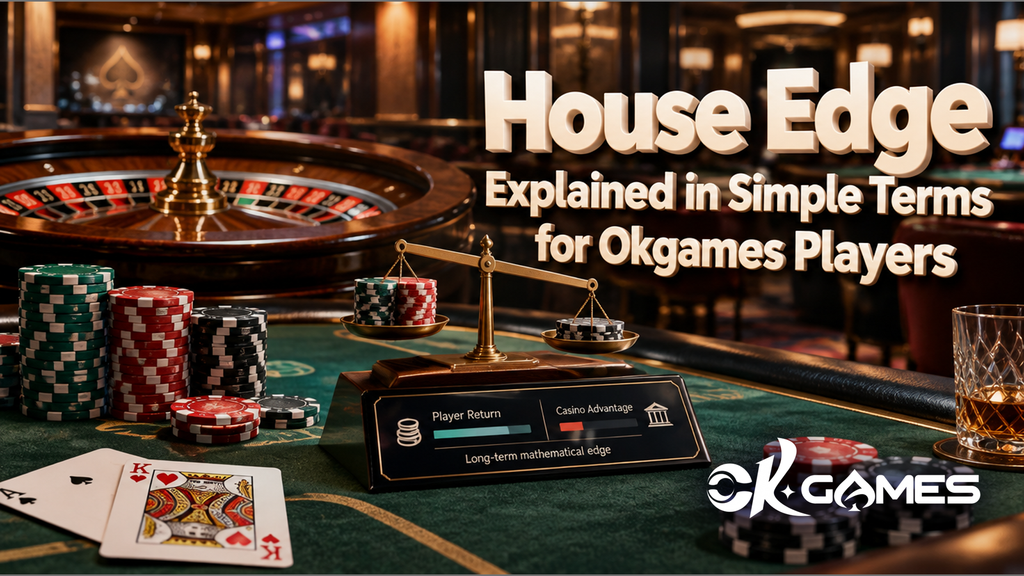
It’s why games of chance benefit the house, prize machines turn a profit, and raffles raise money. Ever wonder how regular deals really work? With a clear explanation, anyone can follow it, including people who play on Okgames. Using real-world examples, this article illustrates the house edge and demonstrates how to use it effectively.
The Fundamental Concept
Consider a store. It takes products at one price and sells them at a slightly higher price. That little difference is the rent, employees and profit. No one refers to it as cheating. It’s simply the way the company operates.
This is also how a game with a house edge operates. In the long-term, the rules and incentives are structured so that the organizer keeps a small fraction of the profits. It is still possible for individual players to win. Some people are quite successful. However, the organizer wins when a large number of players participate.
Everyday Deals Have Edges
A raffle. A group sells tickets and awards a reward that is less expensive than the proceeds. The additional funds are donated to the cause. Although each ticket purchaser has a slim chance of winning, they often pay slightly more than they receive.
A machine that dispenses prizes. A machine has a prize worth more than one try and charges a small fee for each attempt. Most attempts are unsuccessful. The machine still generates money because the ones that do are so uncommon.
The game involves a coin toss where the payouts for winning and losing are not equal. Even though each flip is 50/50, you would lose money over several flips if your friend paid you slightly less when you won than when you lost.
It’s the same everywhere. To benefit in the long run, the organizer sets the price and the chances.
Using Roulette as an Example
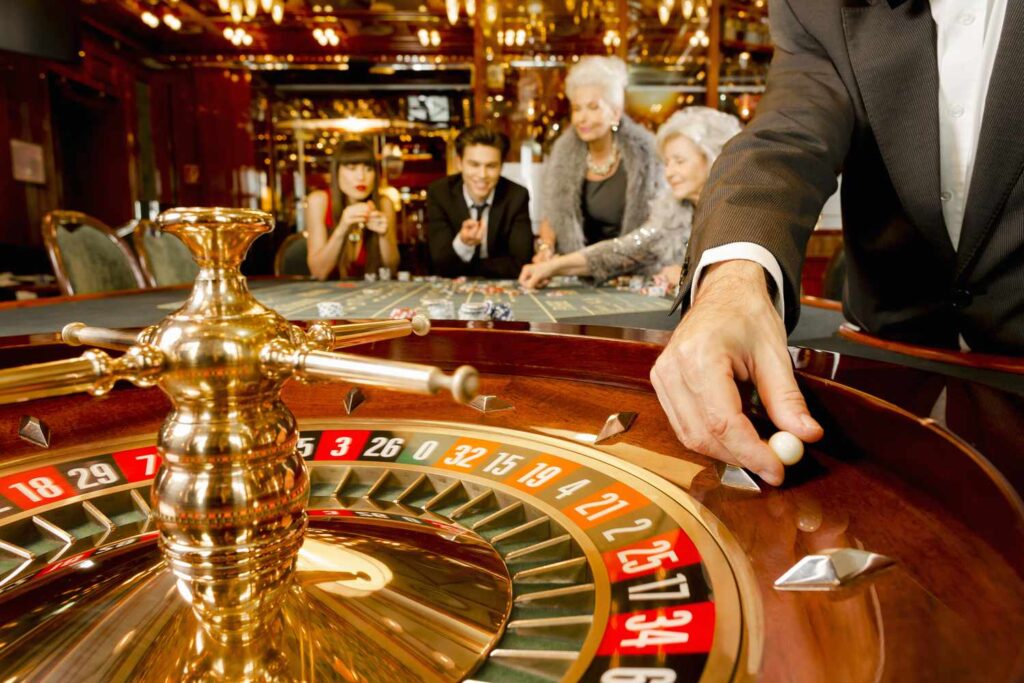
One popular method is to view the concept using roulette. In addition to a zero and, on certain wheels, a double zero, a roulette wheel features numbered pockets. The game pays you less than what the actual chances would indicate if you wager on just one number. The edge is that little space at the edge.
There are two things to be aware of. First, the precise criteria are important since the extra zero on some wheels increases the disparity. Secondly, having an advantage does not guarantee that you will always lose. It simply indicates that the game is priced so that the house gains over a number of spins.
The Edge is based on the total amount of money played.
It does not go towards the initial stake, but towards the total amount wagered. This can easily be forgotten.
Suppose a person plays a lot of games at a moderate investment and earns a lot of winnings. The final amount played can be significantly more than the initial sum because winnings are wagered again. It’s all around the margins.
As a consequence, fast games can be perceived to be costly even when the edge is minimal. The total amount of money at risk increases with the number of rounds played.
The Significance of “Return to Player”
“Return to player,” or RTP, is a word you may encounter. It is the edge’s opposite side. A high RTP indicates that the game is intended to refund the majority of the money wagered over an extended period of time. The edge is the remainder.
There are two important points. First, the average is dispersed over a large number of rounds, meaning that many players participate. Secondly, RTP does not predict the outcome of your own session. It is possible for one player to perform far better than the average and for another to lose everything. They both fall under the same RTP.
Why One Session Doesn’t Match the Average
Results in the short term fluctuate greatly. A game that has an edge may make you a lot of money for an hour and a fair coin can come up heads several times in a row.
No loophole there! It’s simply the appearance of randomness in small samples. Some believe that evidence that the edge can’t be found is a successful session. Some think that a bad session is proof of the unfairness of the game. Neither is accurate. Only when a large number of bets are made does the edge consistently appear.
However, there’s no such thing as an edge that will fade away. It will not be cancelled after a successful run. It’s just not ready yet.
How the Edge Is Used by Organizers
The perspective of the organizer is a business approach to the edge. It is not necessary for a raffle club to defeat every customer. Only a large number of tickets must be sold. Every winner does not have to be stopped by a prize mechanism. It simply requires numerous attempts.
With large numbers, luck is leveled. The results of a single person are unpredictable, but thousands of results will come close to the average. This phenomenon allows for planning around the edge of the session, even if individual participants do not know what session they will be at.
Does the House Edge Equate to Cheating?
No. The rules and payouts are meant to be made public, and the edge is a component of how fair transactions are created. Neither a game that pays marginally less than the actual odds nor a raffle that donates a portion of the proceeds to charity is deceptive.
The real warning signs are when there are uncertain rewards, hidden rules or non-random outcomes.Because of this, it’s more important to check who controls a game and how it’s governed than to worry about the edge itself.
Is Strategy Able to Perform Better?
A pure chance game has no betting strategy to change the odds. It is not influenced by chasing back wins, doubling your bets after losses, or when to play.
Making wise selections can reduce the advantage in some games. However, they never promise a profit and typically don’t eliminate it.
Before participating in any game, read the rules.
There are a couple of simple checks on any contract that involves chance:
Locate the help page or the rules. Payouts need to be well explained.
If a return-to-player number is given, search for it.
Compare various versions of a game. The edge can be altered by minor rule variations.
Keep an eye out for add-ons and side bets. They frequently have a greater advantage than the main game.
Review the terms of the bonus. The actual value of a bonus can be altered by playthrough rules.
A game won’t be won by knowing these specifics. It helps individuals to make informed choices.
Around the Edge Planning
Chance-based entertainment inevitably costs money due to the edge. It’s set like a concert or movie ticket to keep expectations in check. Prior to beginning, decide on a set amount, keep sessions brief, and end after the allotted amount has been utilized. Don’t chase losses, don’t spend payment funds or savings. Playing with real money is only appropriate for adults.