13-Card Rummy Rules Explained Through the Questions Players Actually Ask

Ask ten new players what confuses them about rummy, and you will hear the same handful of questions. They usually concern what counts as a valid hand, why one run matters more than another, and when it is safe to declare. Here are straight answers, one question at a time.
How Many Cards Does Each Player Get?
In this format, every player is dealt 13 cards, which is where the name comes from. The remaining cards form a closed deck, and one card is turned face up to start the discard pile.
On each turn, you draw one card and then discard one, so your hand always returns to 13. Keeping that count in mind helps you notice mistakes quickly, before they cost you a game. If your hand ever holds 12 or 14 cards at the end of a turn, something went wrong.
What Makes a Hand Valid?
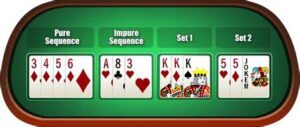
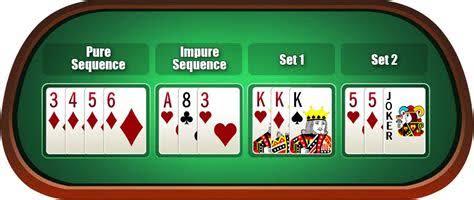
The 13 card rummy rules require every card to belong to a valid group, and at least two of those groups must be sequences. One of the sequences has to be pure.
The remaining cards can sit in extra sequences or in sets. A single card left outside any group means the hand is not ready to declare, however close it looks. Even one stray card spoils an otherwise complete hand.
What Exactly Is a Pure Sequence?
It is a run of three or more consecutive cards in one suit with no joker involved. The 4, 5 and 6 of clubs is a clean example of the idea, and a longer run such as 4 to 8 qualifies just as well.
A run that uses a joker in place of a missing card is called impure. It still counts as a sequence, but it can never be the one that satisfies the pure requirement.
Can an Ace Be Used in a Sequence?
Yes. An Ace can sit low, before the 2, or high, after the King, so A-2-3 and Q-K-A are both valid runs. Both are worth remembering when you scan your hand.
Wrapping around does not work. K-A-2 is not a sequence, so never plan a hand around it. This is one of the most common slips among newcomers, and it is easy to avoid once you know.
Why Do the Pure Sequence Rummy Rules Matter So Much?
The pure sequence rummy rules decide the outcome at the moment of declaration. A hand full of tidy sets and an impure run still fails if no pure sequence exists.
That is why experienced players hunt for it within the first few draws. Almost everything else in a hand can be patched with jokers, but this one requirement cannot be patched at all.
Is a Set the Same as a Sequence?
No. A set groups three or four cards of the same rank from different suits, such as three Kings of three suits. A sequence groups consecutive ranks within a single suit.
Two cards of the same suit cannot share a set. That detail catches out many players at tables where more than one deck is in use, so keep it in mind whenever you count your groups.
What Happens if I Declare Too Early?
A wrong declaration usually brings a penalty, and the exact amount depends on the table. Treat declaring as a final check rather than a hopeful guess, because the cost can be sharp.
Before you declare, count your groups, confirm the pure sequence and make sure no card is left over. Thirty seconds of careful checking can spare you a costly mistake.
Do These Rules Change Between Platforms?
The core ideas stay the same, but details such as scoring, drop options and joker handling can vary. Always read the table rules before you join a game, even if the format feels familiar. Habits formed elsewhere do not always carry over.
Treat any guide as a foundation, then confirm the specifics for the place where you actually play. A few minutes of reading prevents most unpleasant surprises later on.
Conclusion
The rules feel heavy only until you see them as a short checklist: 13 cards, valid groups, two sequences, one of them pure. Keep that list nearby while you practise. For rule guides with worked examples, visit masterrummye.com and test each idea in a practice hand.